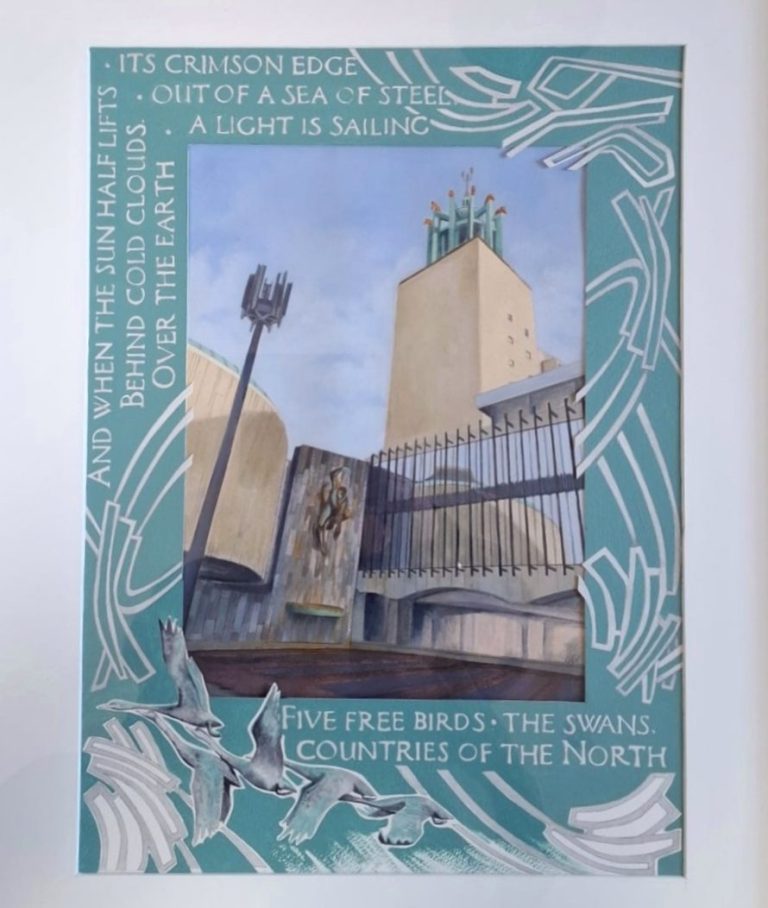
'Five Swans'
Newcastle upon Tyne
Oil & Ink on Arches paper
The Civic Centre in Newcastle is a beautiful example of Modernist design, created with the finest materials and impressive attention to detail.
Designed by architect George Kenyon, it was opened in 1968 by King Olaf of Norway. It houses some impressive examples of mid-century artwork, including the Five Swans and God of Tyne sculptures by David Wynne, murals by Victor Passmore, metal sculpture by Geoffrey Clarke and tapestry by John Piper, many of which are represented in this illustration. Seahorse motifs can be seen throughout, reflecting the North East’s maritime heritage and links to Scandinavia.
The illustration here was completed using ink and oil. The verdigris colour of the border reflects the effects seen on the decorative copper elements of the building itself. The border features an excerpt from The Swans from the North by Hans Hartvig
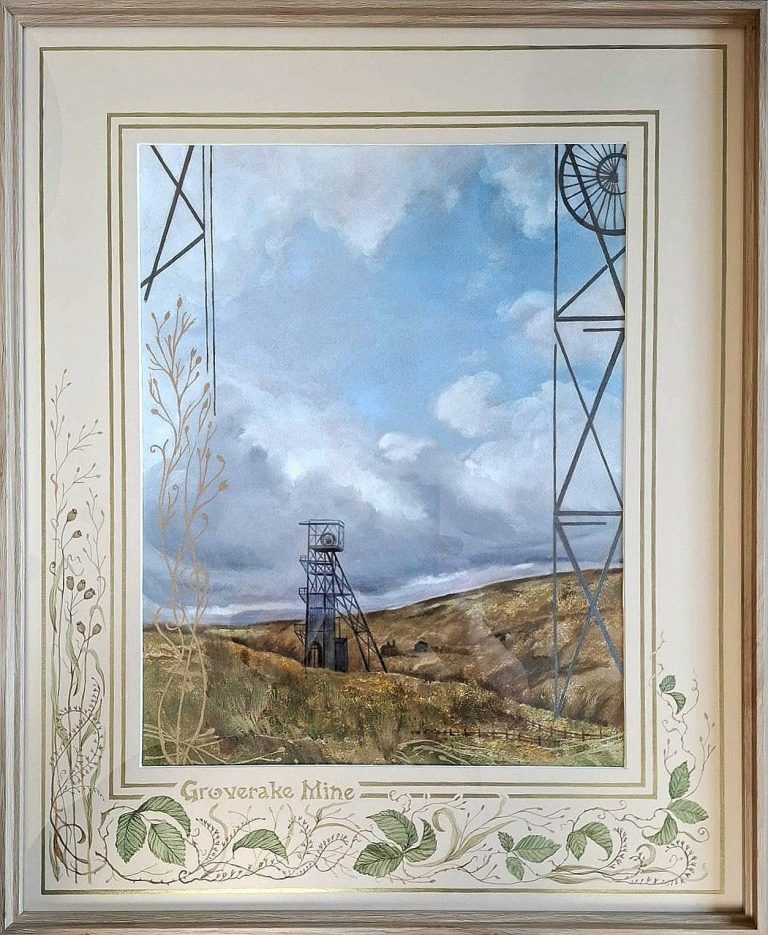
Groverake Mine, County Durham
Oil & Ink on Arches Paper
Groverake Mine is the last remaining mine frame in County Durham. Beginning its life in the late 18th/early 19th century as a lead ore site, It was later operated until 1999 as a flurospar mine.
The wild landscape around the structure is particularly inspiring as a painting subject, with big, dramatic skies and rugged hills. The rough, skeletal looking mine frame suits the scene particularly well, and is a fascinating reminder of the industry which once dominated the area.
The illustration seen here is in ink, oil and liquid metal. The border reflects elements of the mine and elements of the natural landscape.
A hand finished mount with gold pin striping, seed heads detail and lettering completes the composition.
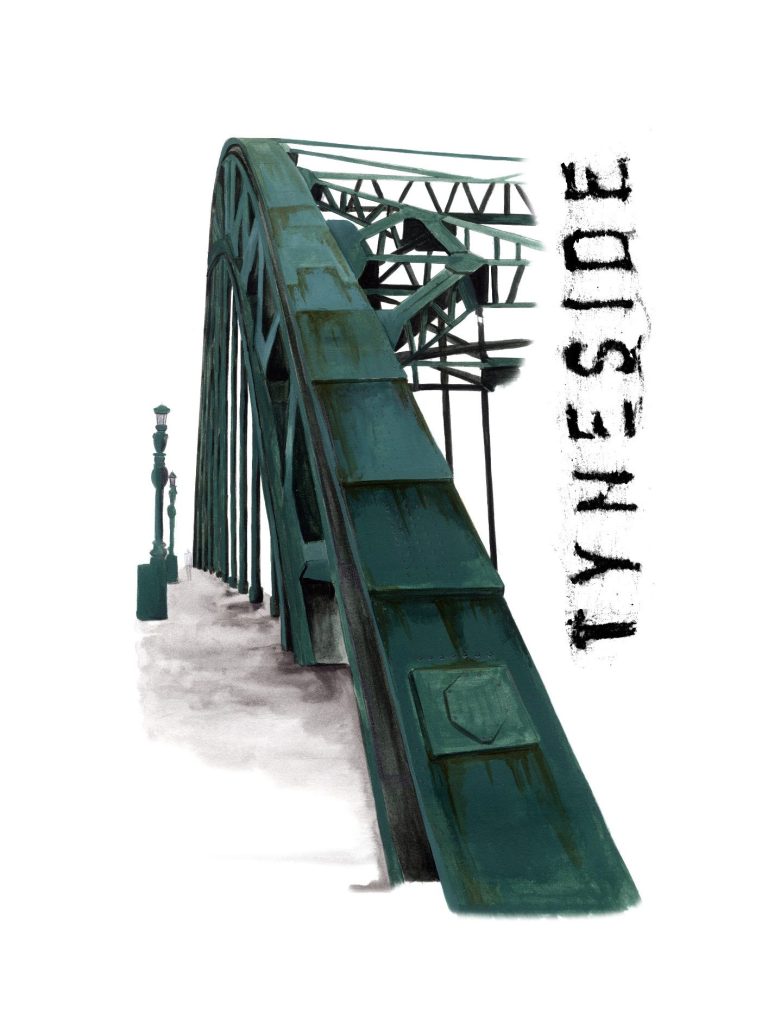
Three Bridges
Watercolour and ink on Arches Paper
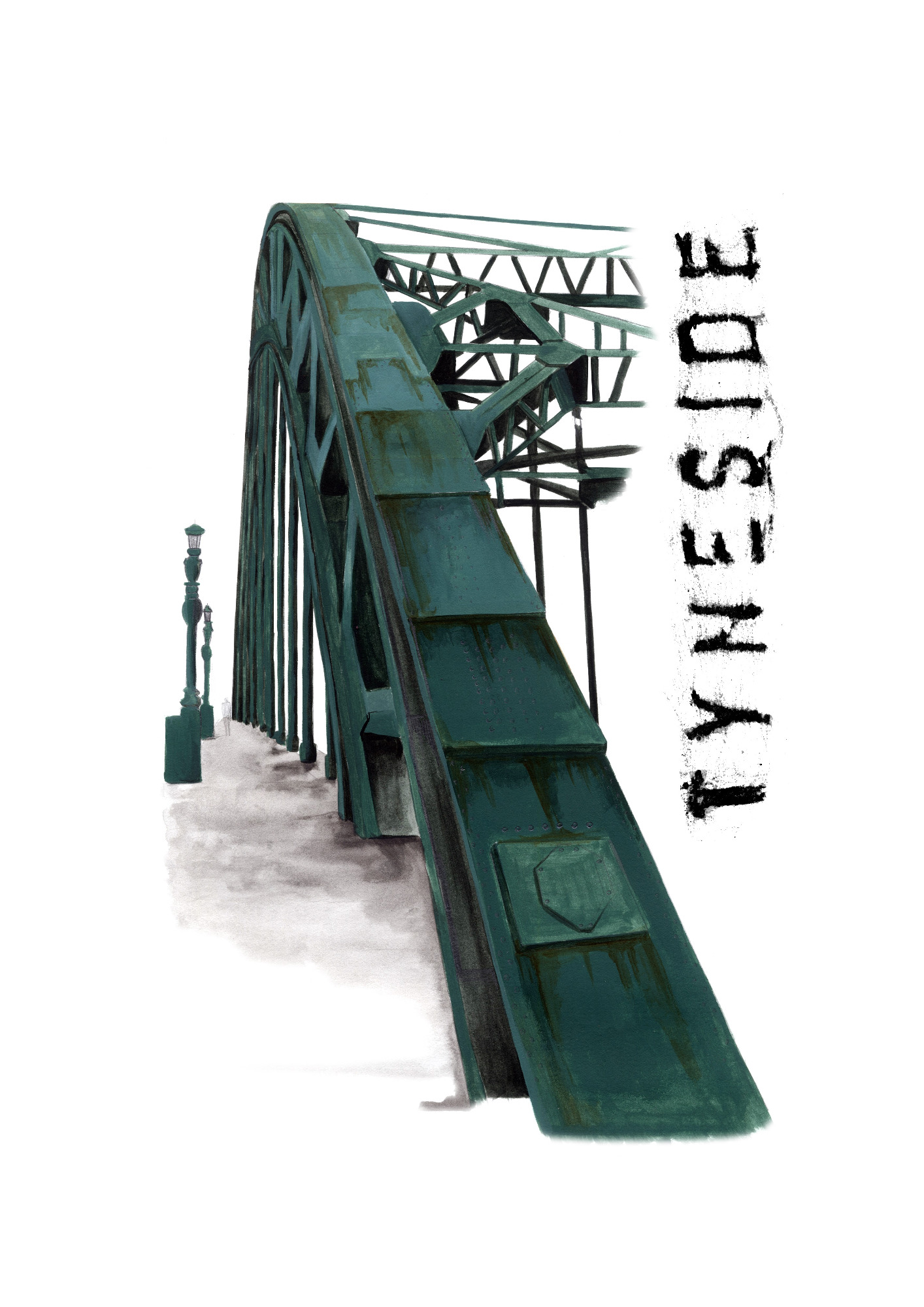
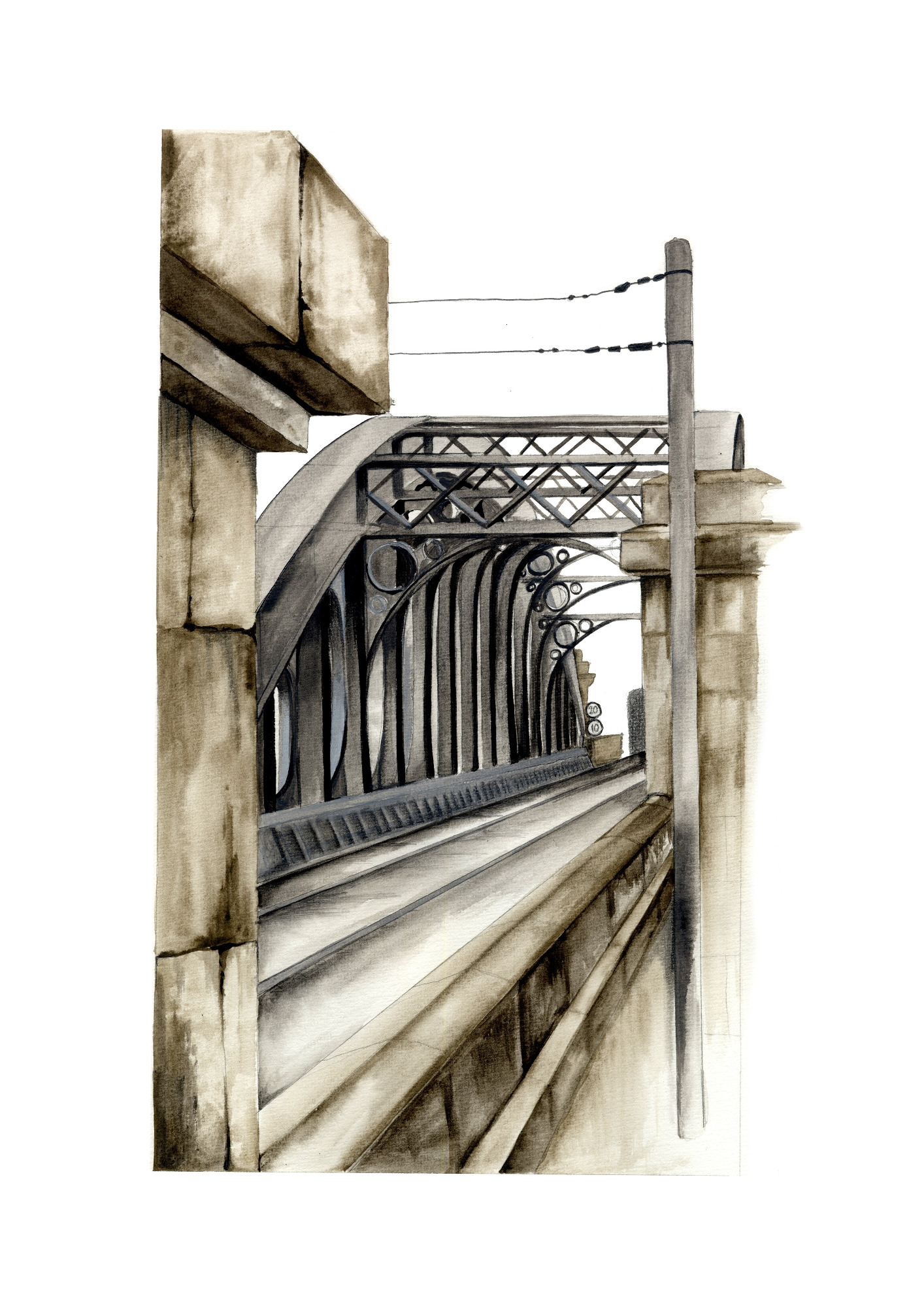
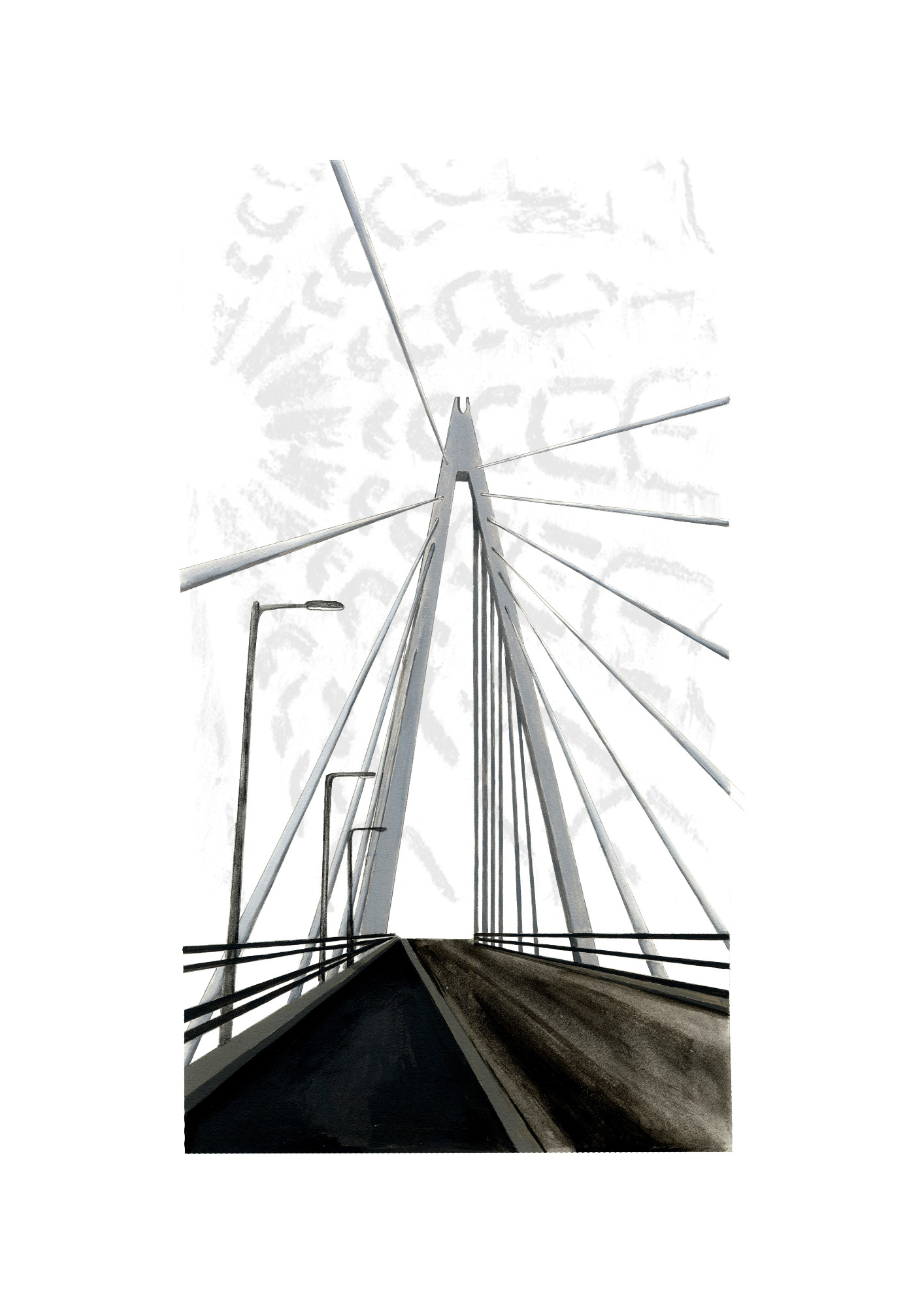
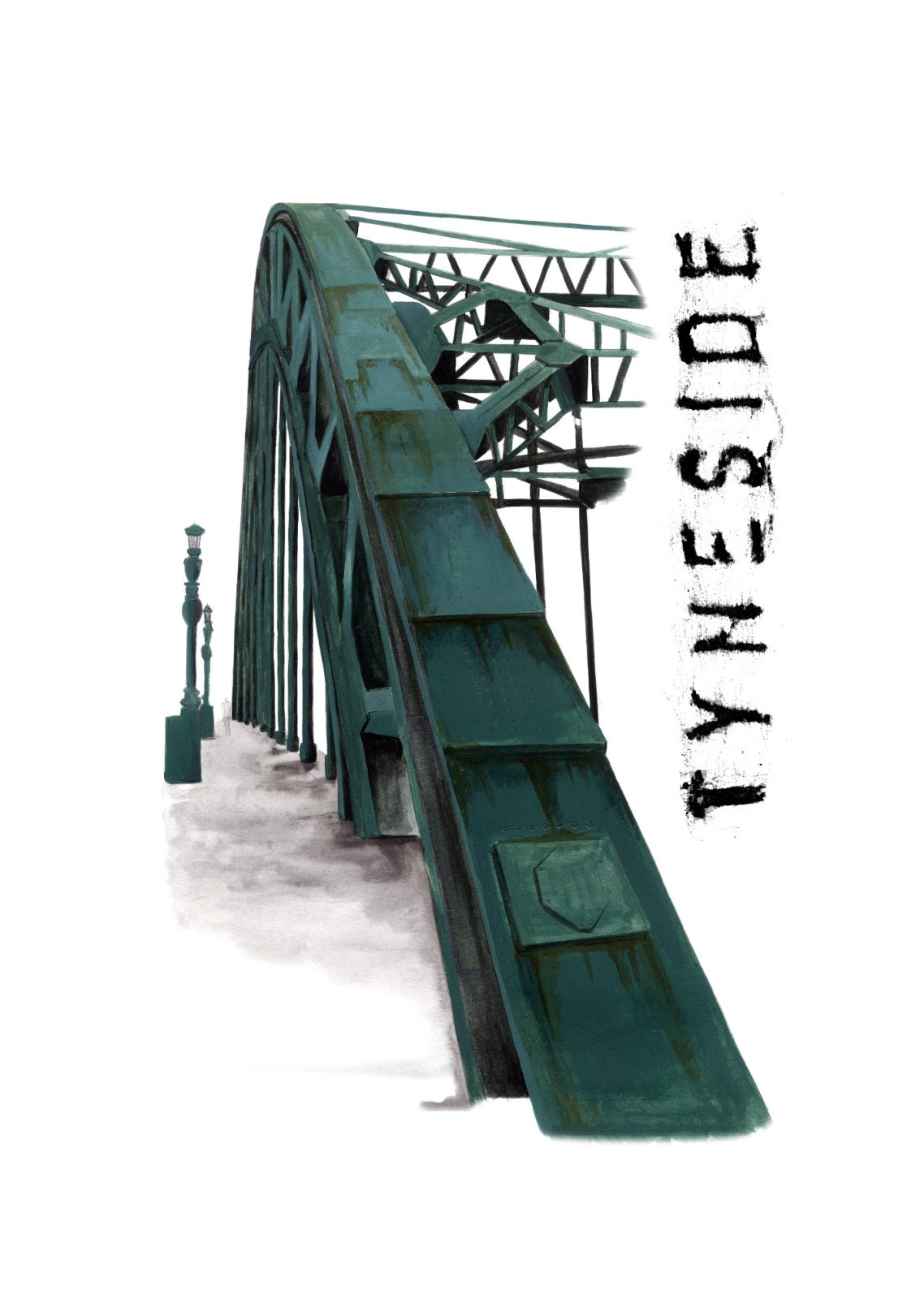
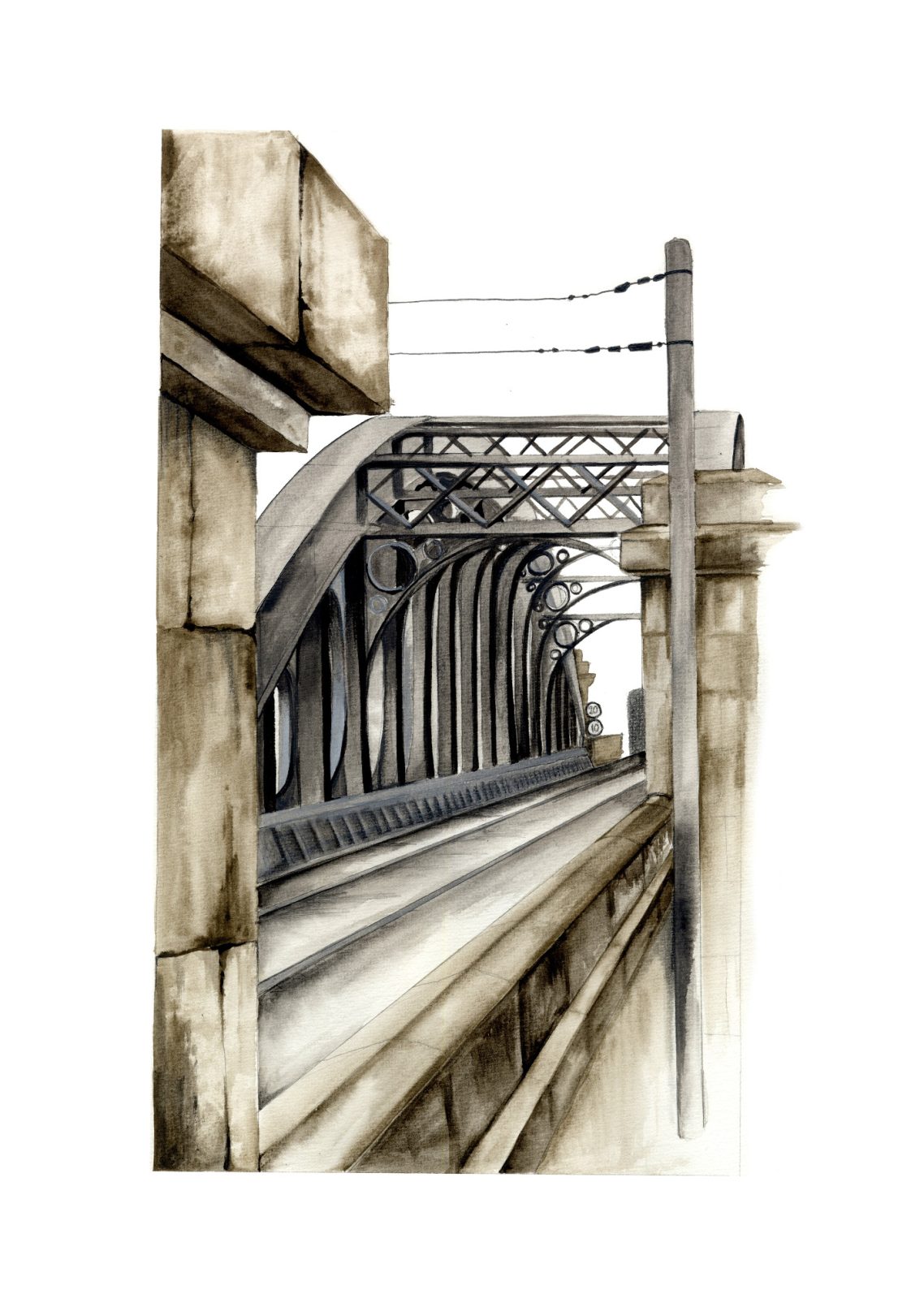
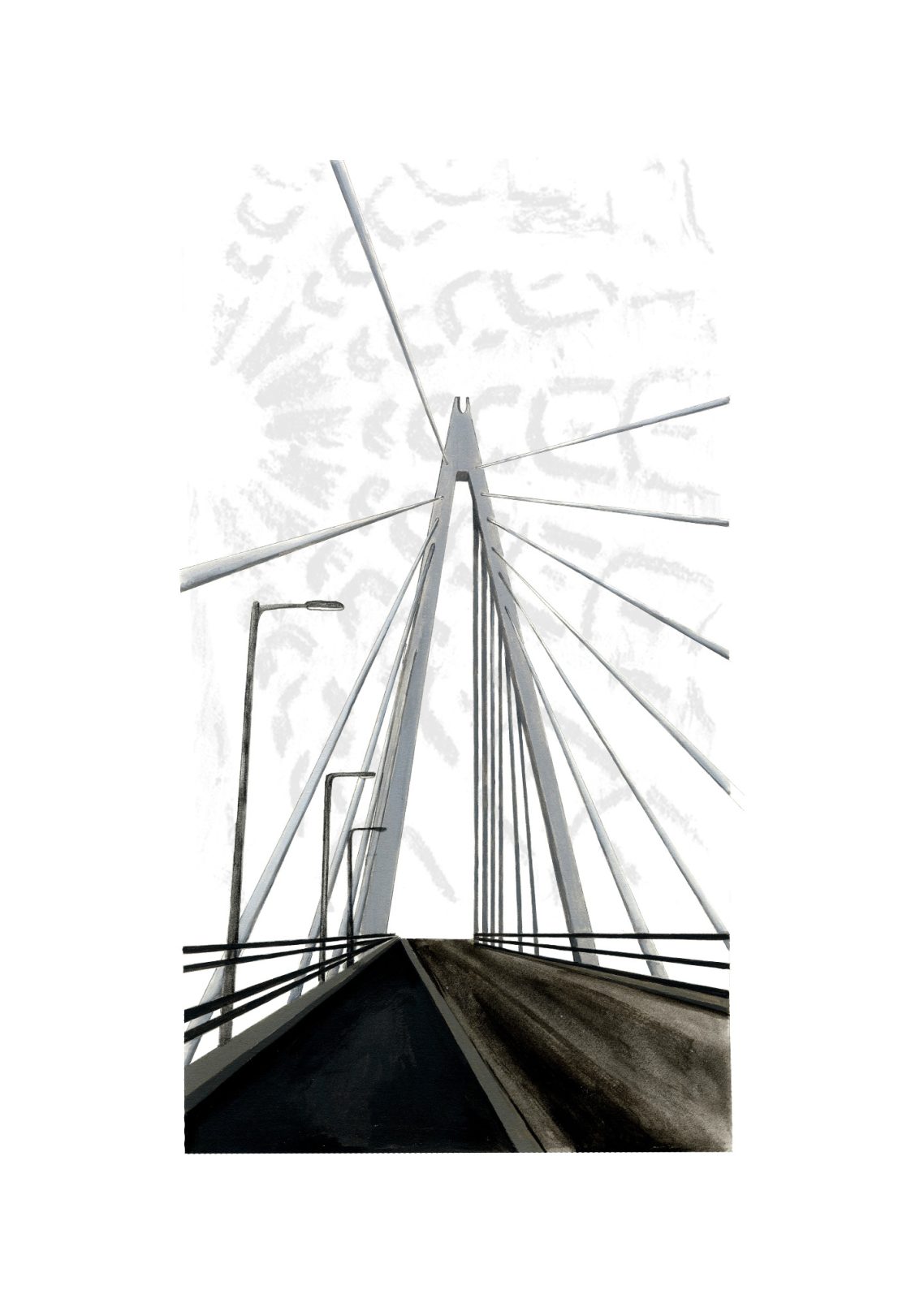
A series of three iconic Northern bridges. Painted in a graphic style using watercolour. The Tyne Bridge, Monkwearmouth Railway Bridge and the Northern Spire at Sunderland.
The Tyne Bridge and the Northern Spire feature rubbing details taken from the utility covers found on the pavements nearby in order to highlight the fabric of the city itself, and the physicality of the structures.
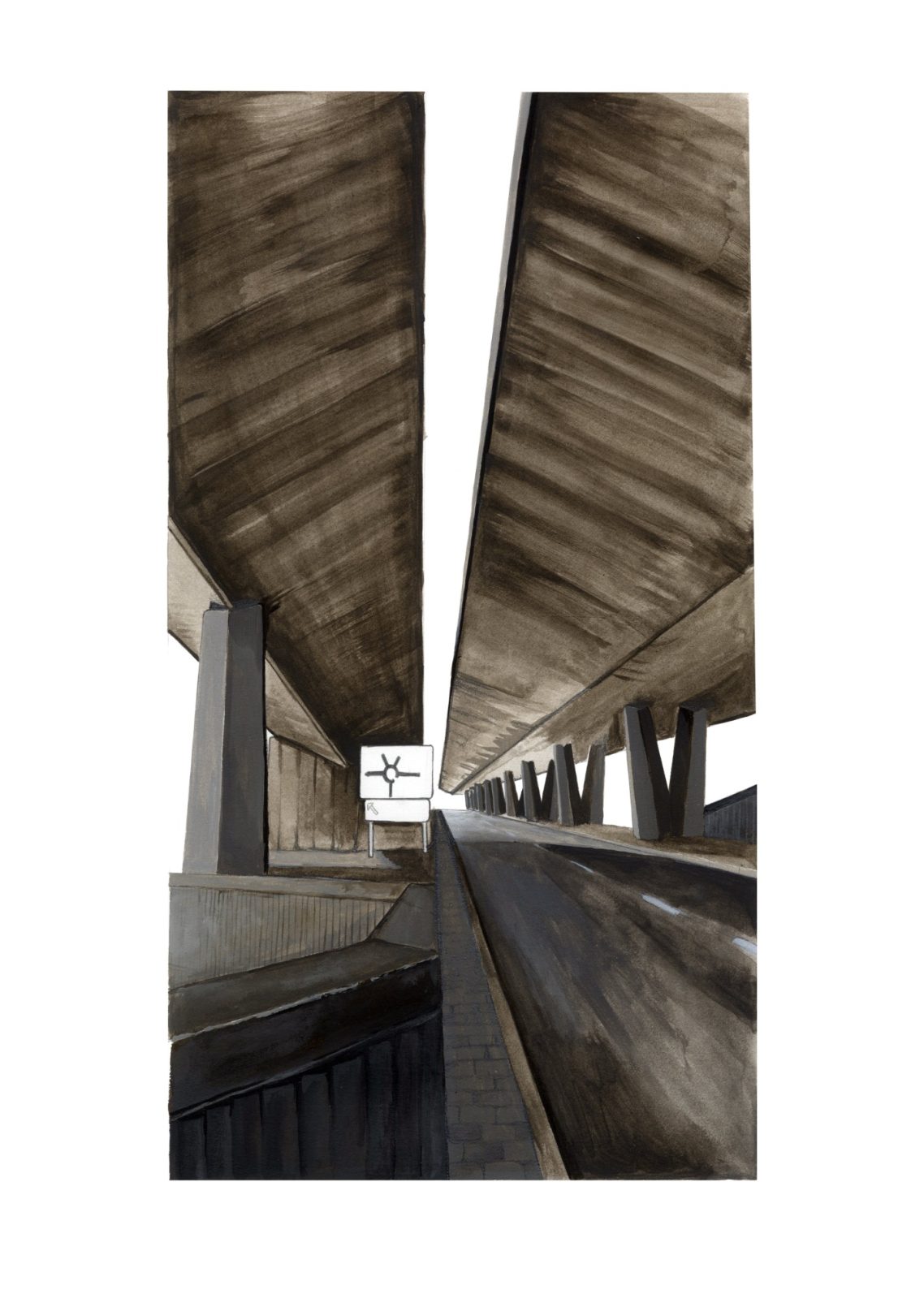
Visions of a Future that never was: Manors , Gateshead Highway & sunderland Civic centre
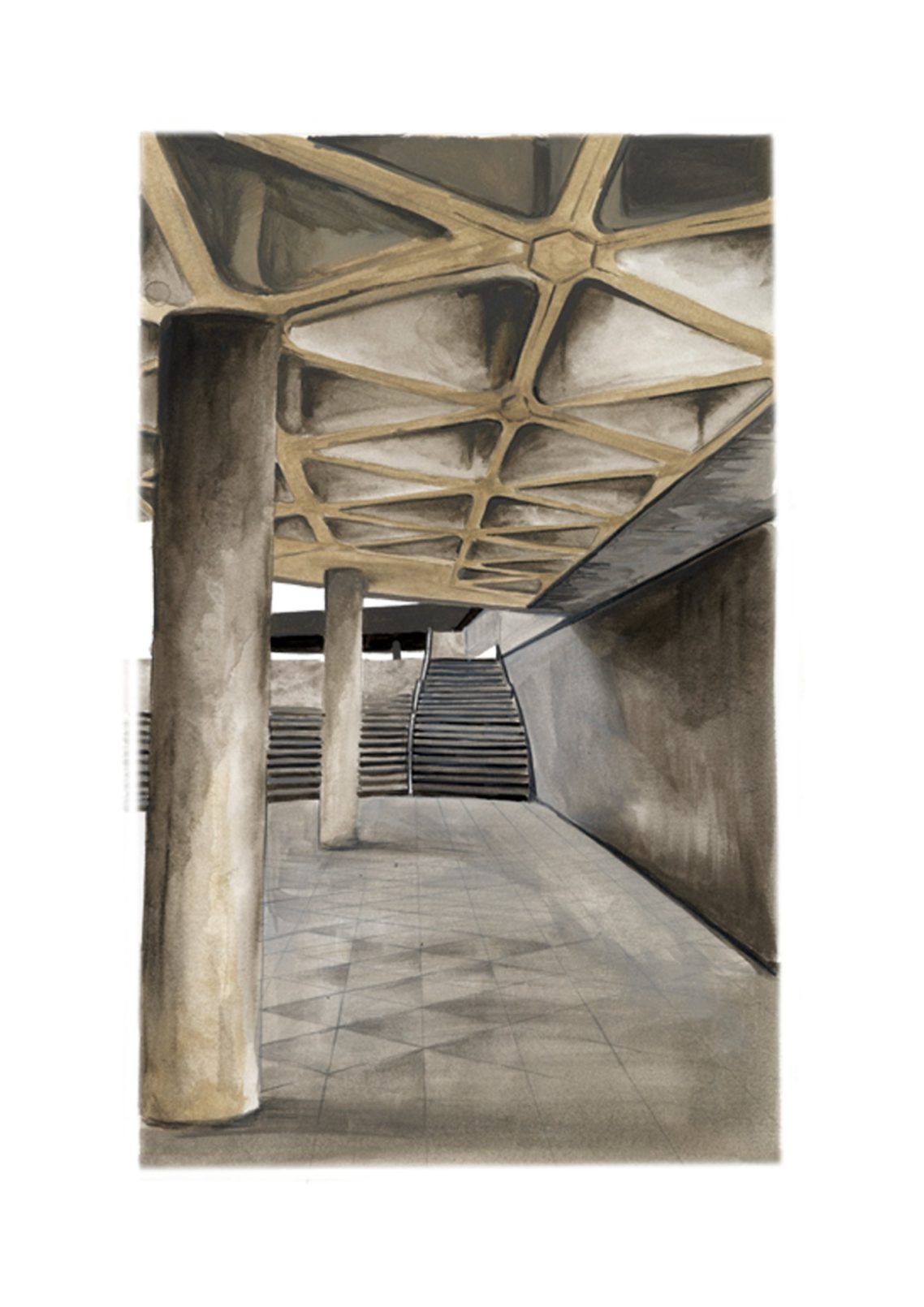
Manors:
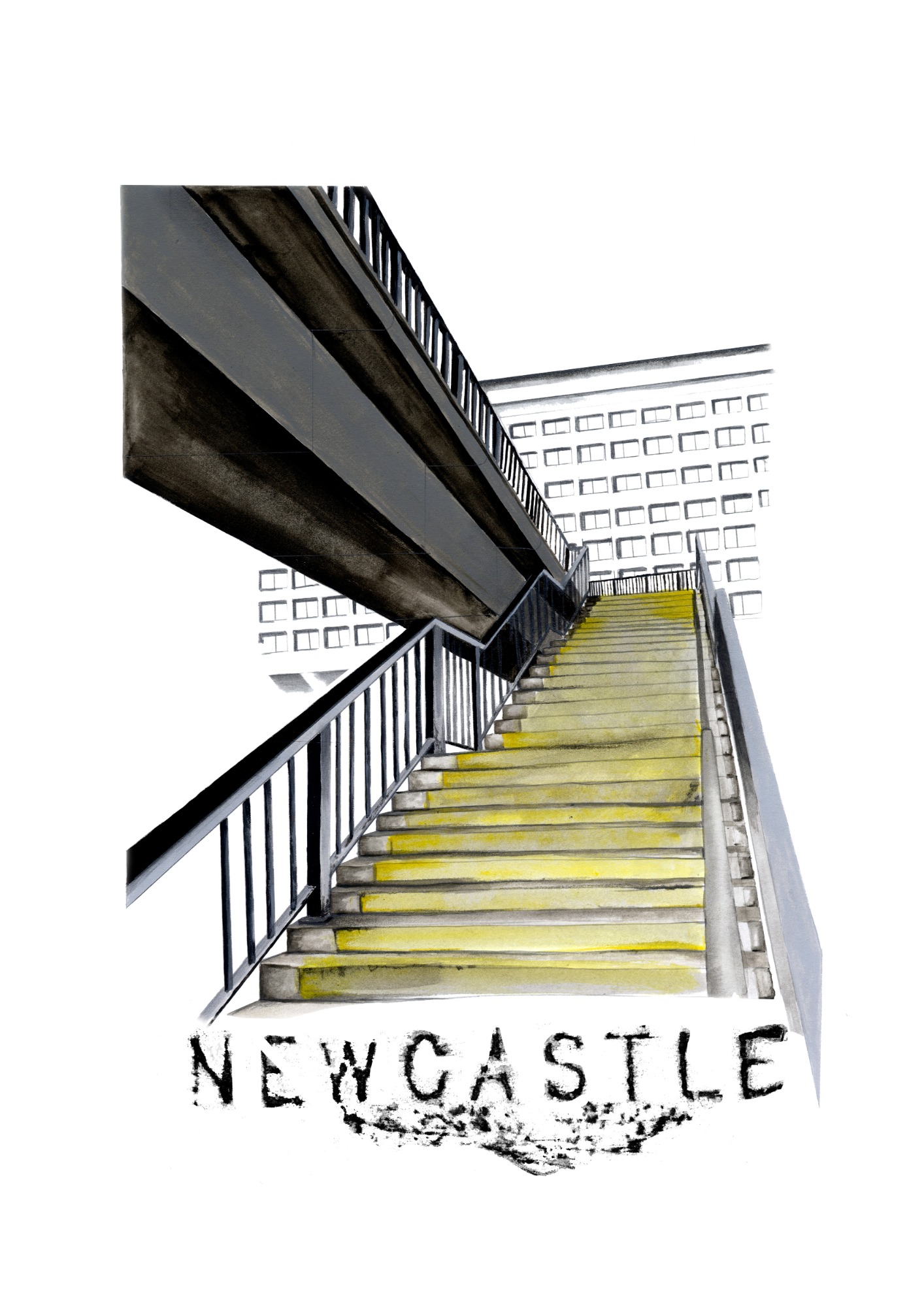
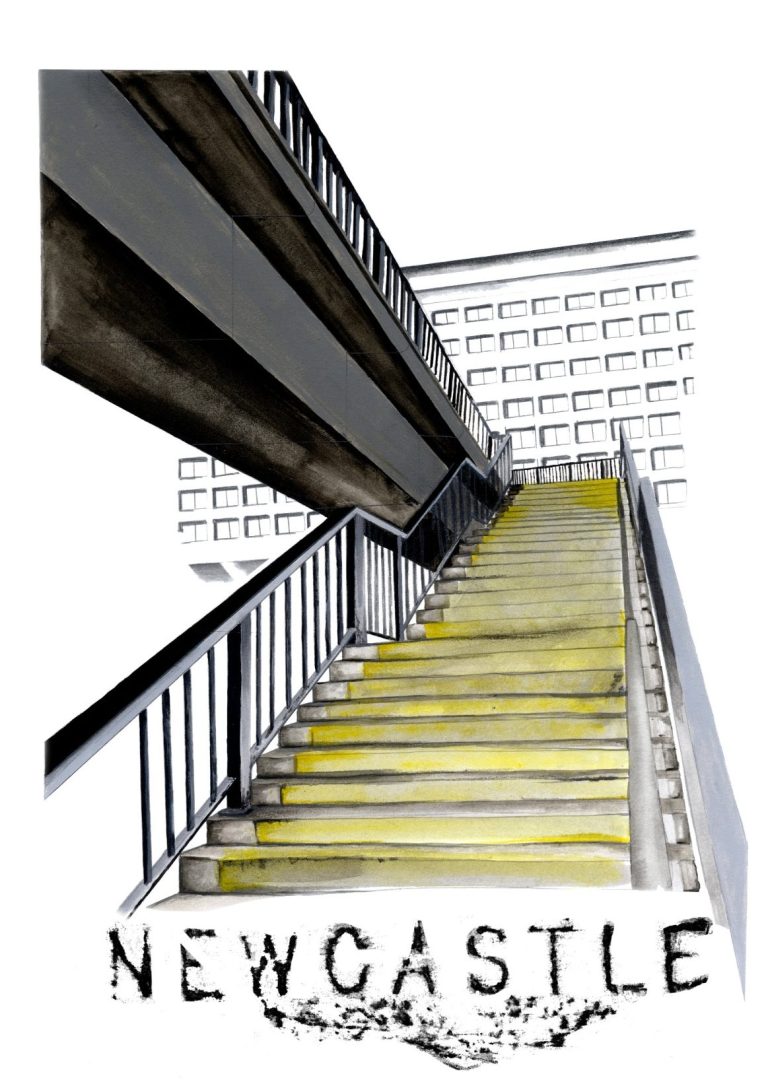
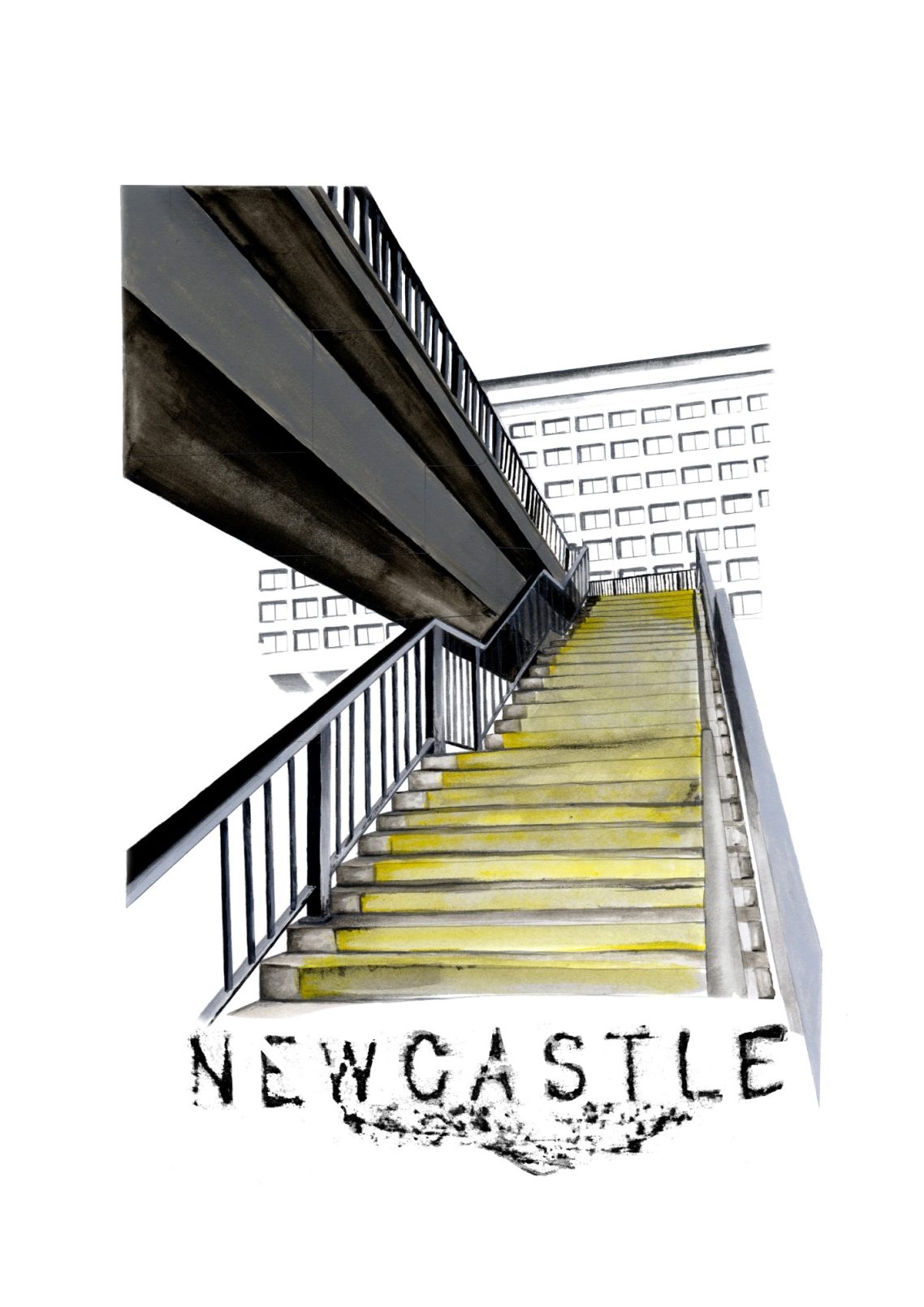
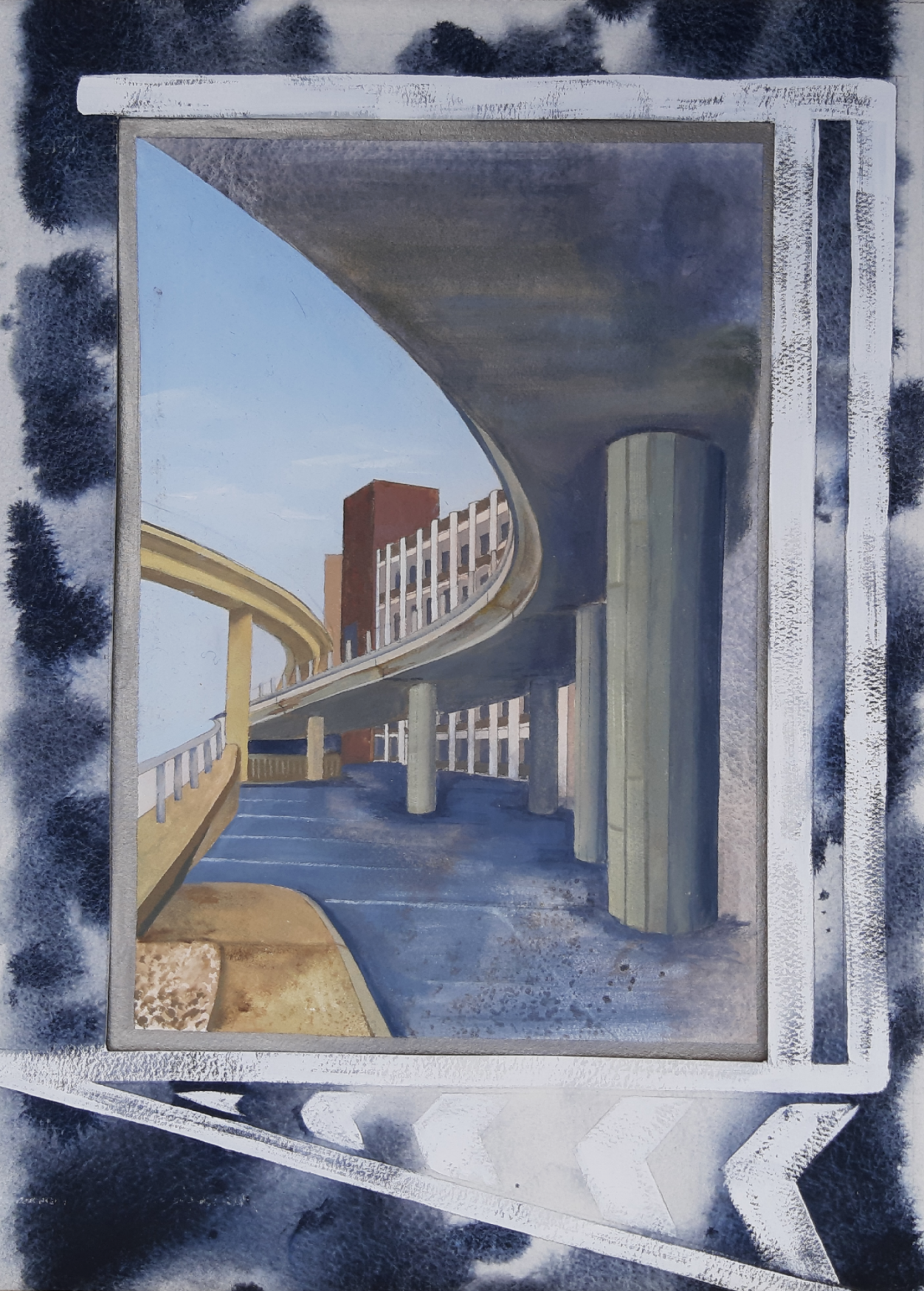
The first painting in this section shows a stairway forming part of the Manors carpark walkways near Swan House roundabout, Newcastle.
Built as the first multi-storey car park in Newcastle, Manors was completed in 1963 and stands as a reminder of the intention of Wilfrid Burns, then City Planning Officer to see motor traffic and pedestrians completely separated in the city. These plans would see Newcastle linked by numerous new motorways across the city (and across the Tyne into Gateshead – see also the Gateshead Highway in this section) combined with pedestrian decks and walkways, which would be used by pedestrians to move around the city, above the traffic on roads below.
The staircase seen here leads to a high concrete walkway, with one direction taking the pedestrian from Carliol Square to the upper levels of Manors Car Park, across lanes of traffic heading towards Gateshead below. The other direction leads to fenced off dead end. Another reminder of the unfinished ‘City in the Sky’ vision of the 1960’s and 70’s
Gateshead Highway:
Built in the 1960’s as part of a bigger plan for an interlinking motorway network across Tyneside, the 900 metre Gateshead Highway structure was designed by Basil Spence and Ove Arup. It features textured concrete panels based on work by artist William Mitchell (a section of which is thankfully going to be preserved) from the Gateshead council website ‘ The only exception to this (the demolition programme) will be two sections of retaining walls with textured concrete panels close to the Bellevue roundabout. These panels were designed by artist William Mitchell and we have been asked to preserve them.’ (Gateshead.gov.uk)
Sunderland Civic Centre:
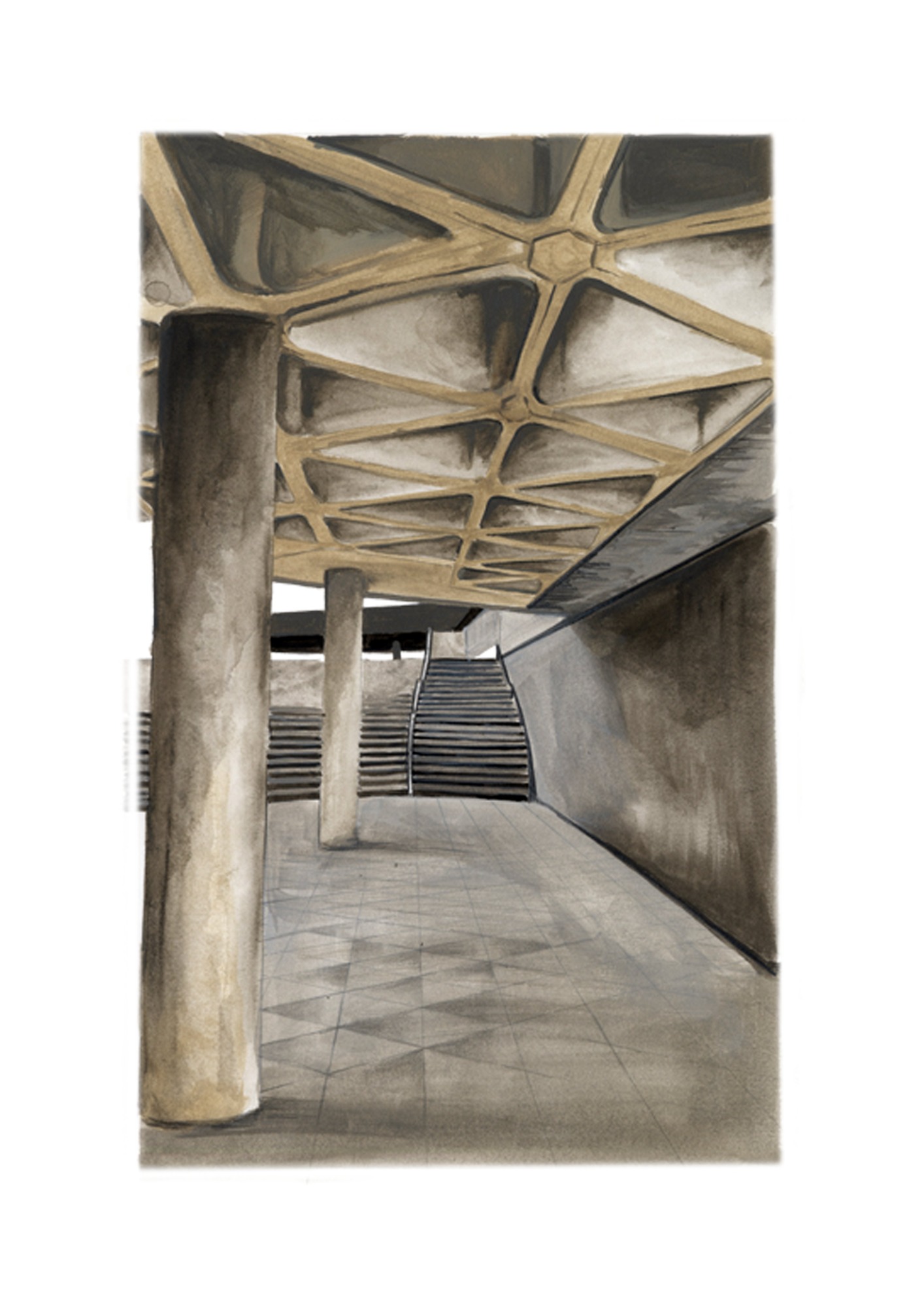
Designed in 1965 by Sir Basil Spence, the old Sunderland Civic Centre is now demolished (2022). Planned and built as two linking hexagonal blocks, the painting here illustrates a detail of the ceiling on the underside of the block, which mirrors the geometric styling seen in the shape of the overall structure.
Central Motorway & B1318, Newcastle upon Tyne
Oil and ink on Arches paper
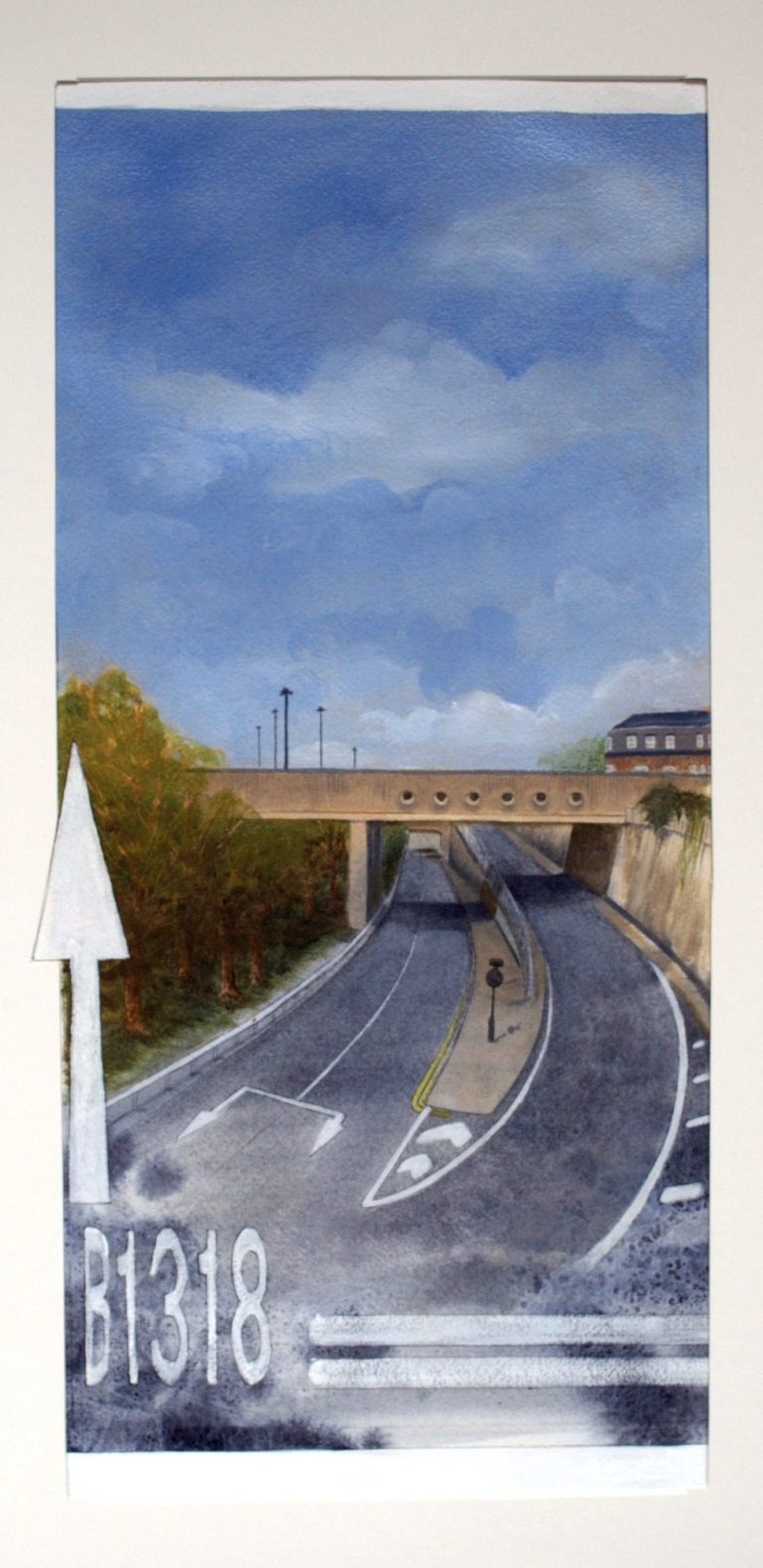
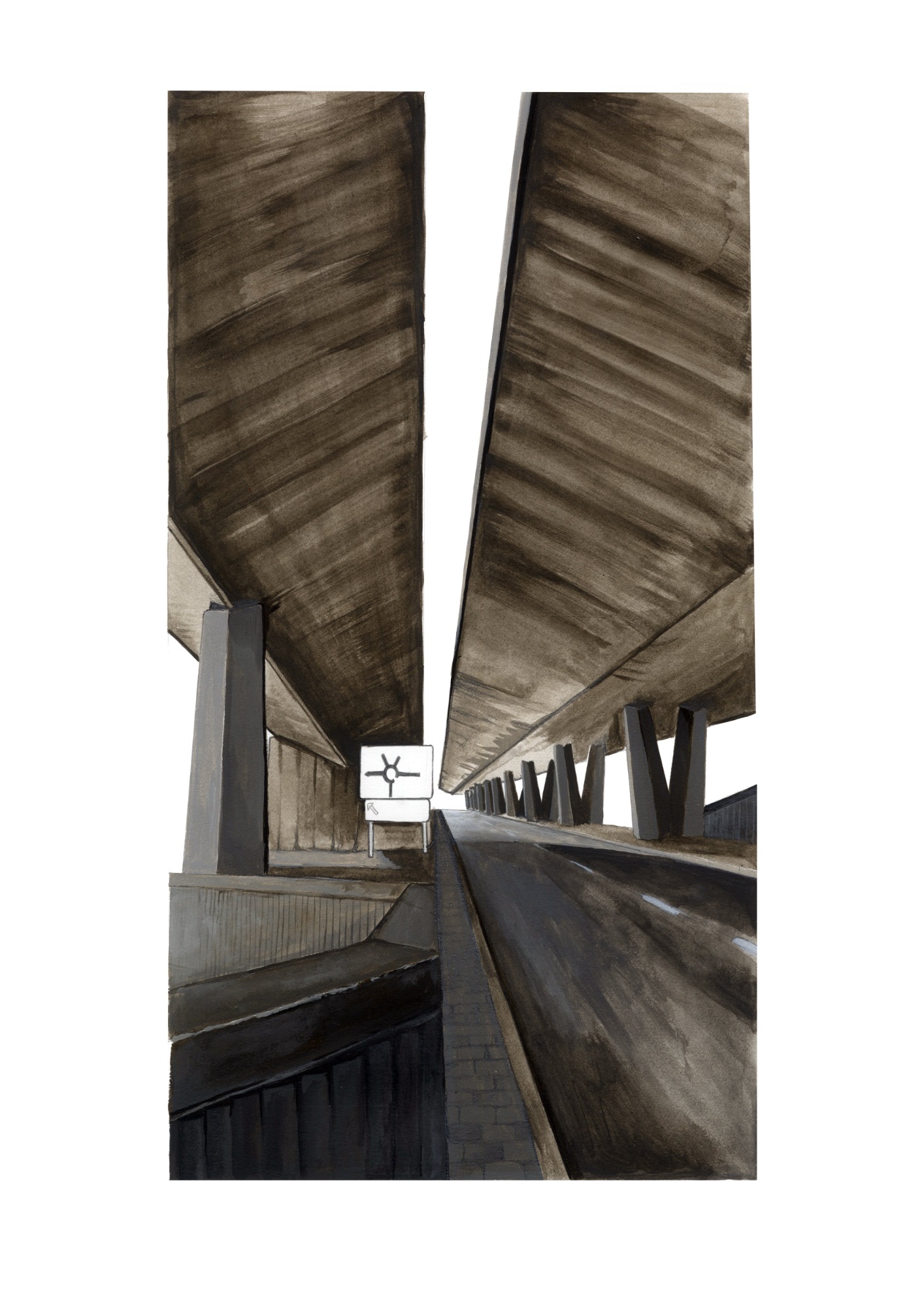
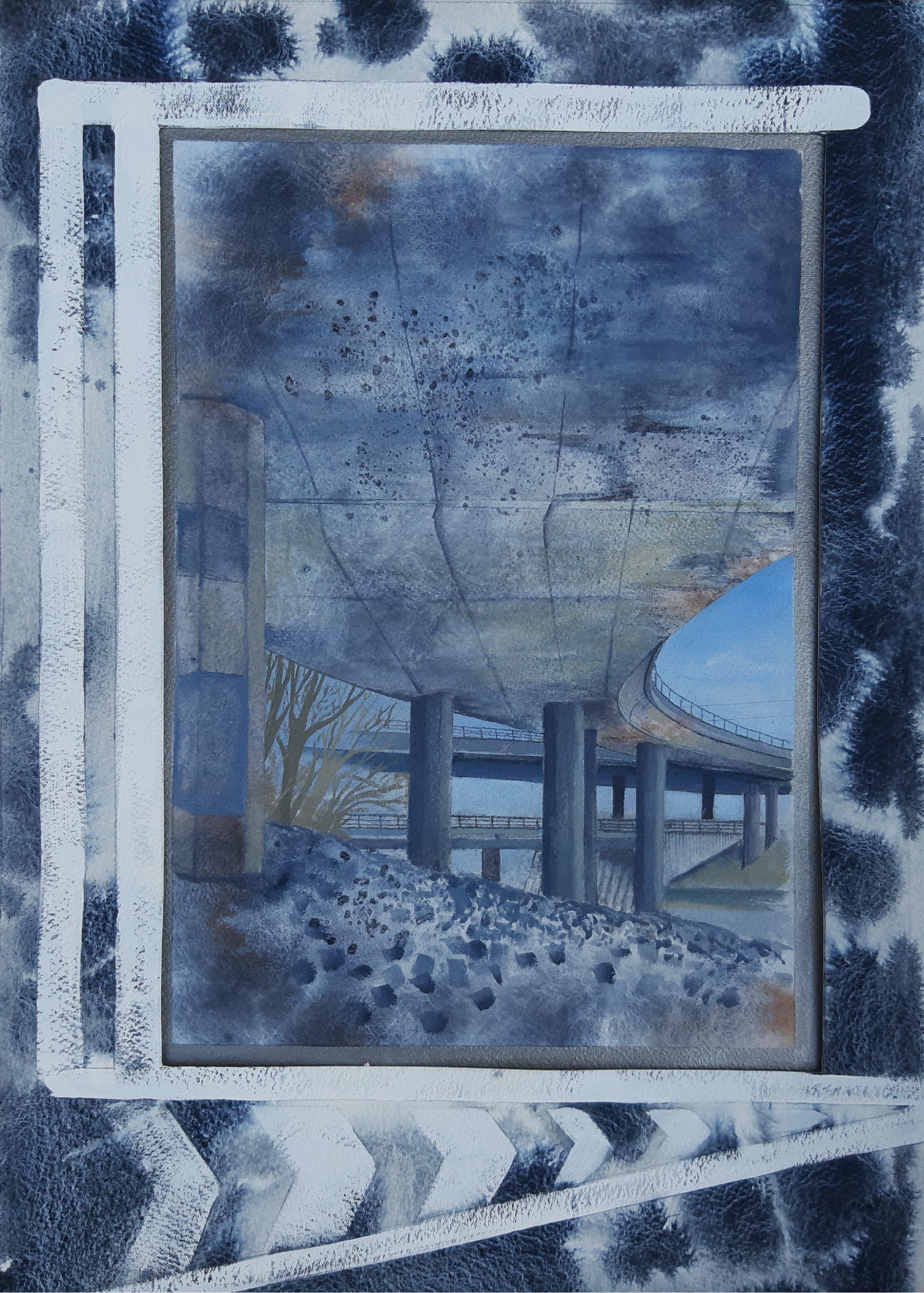
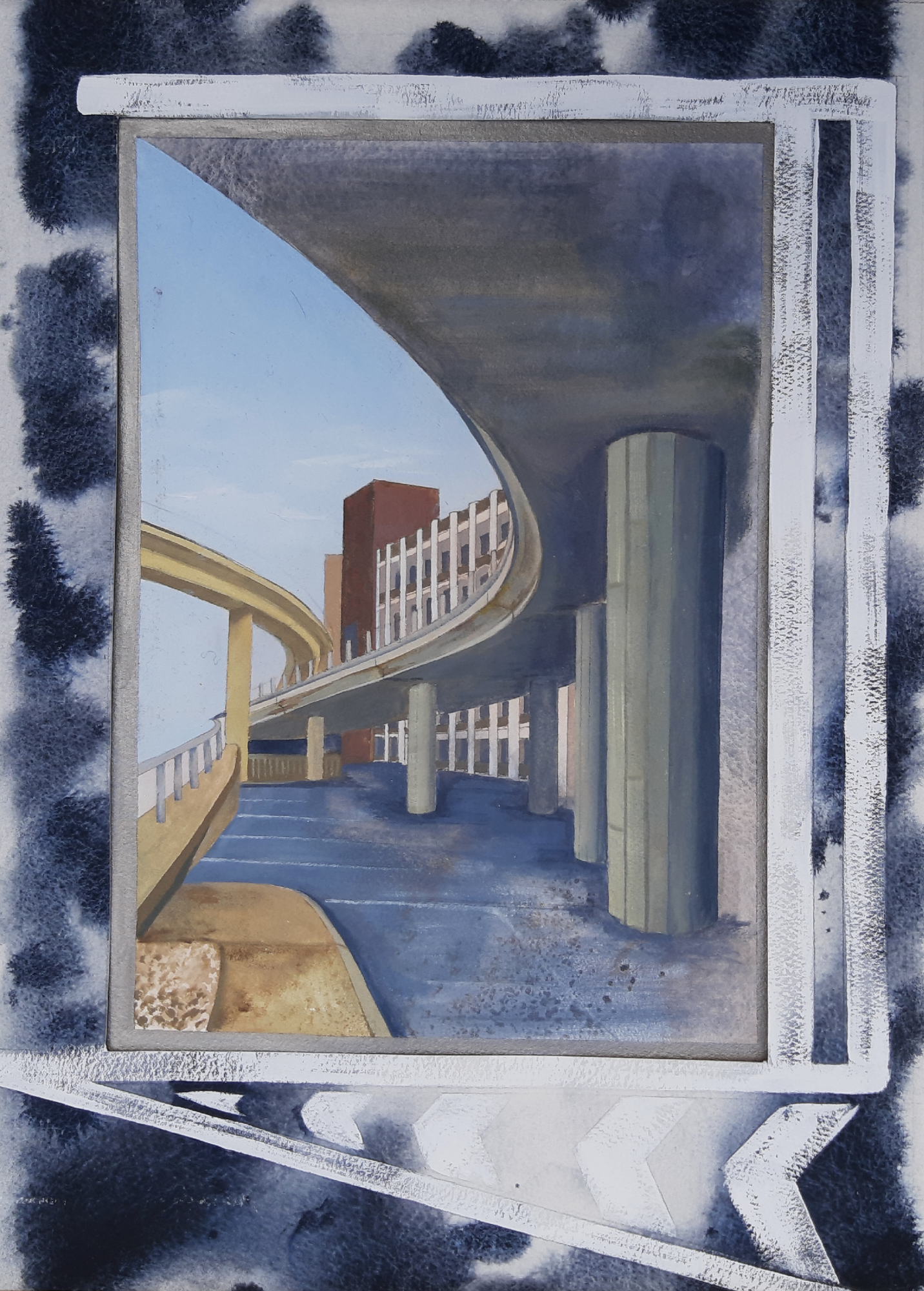
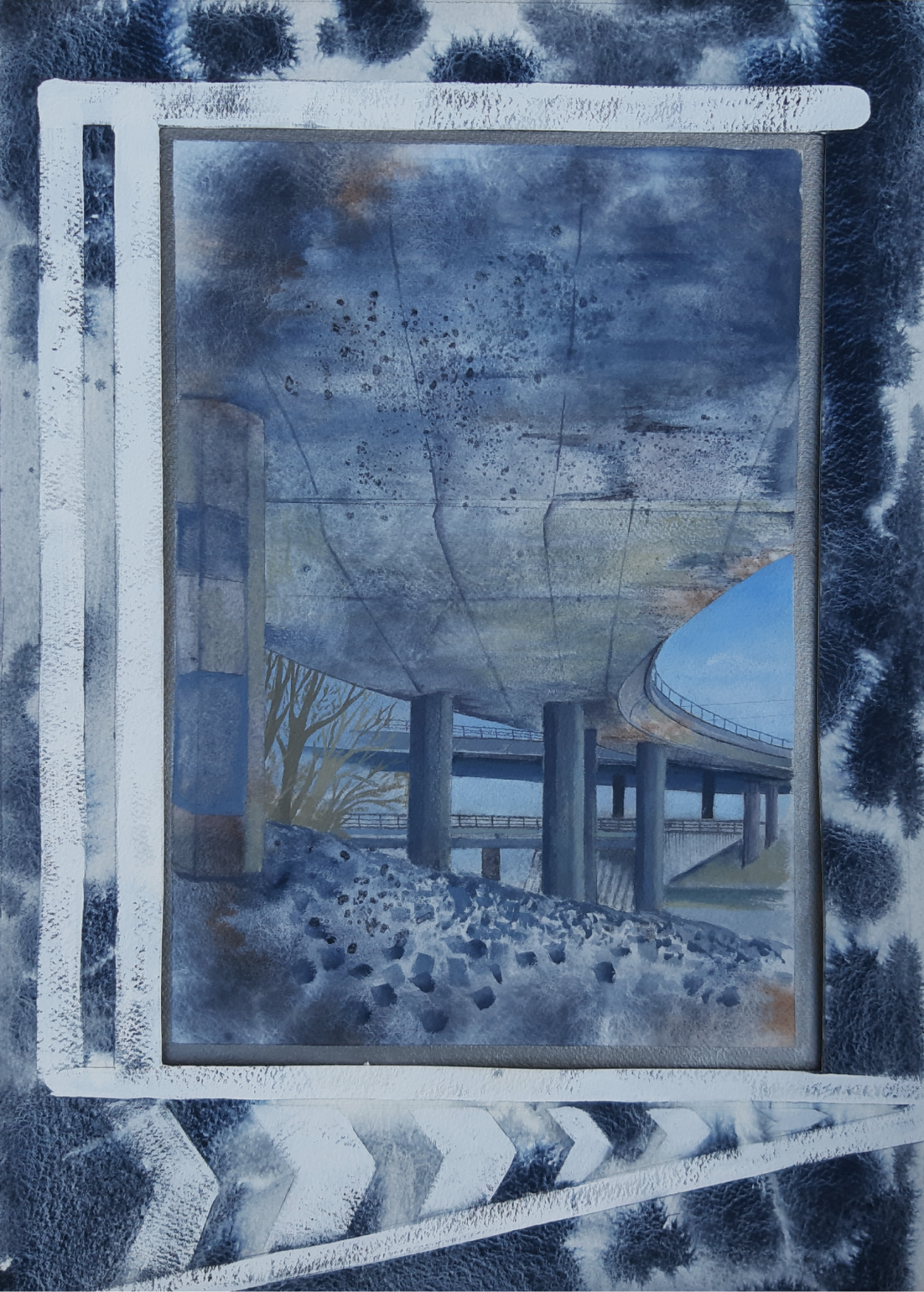
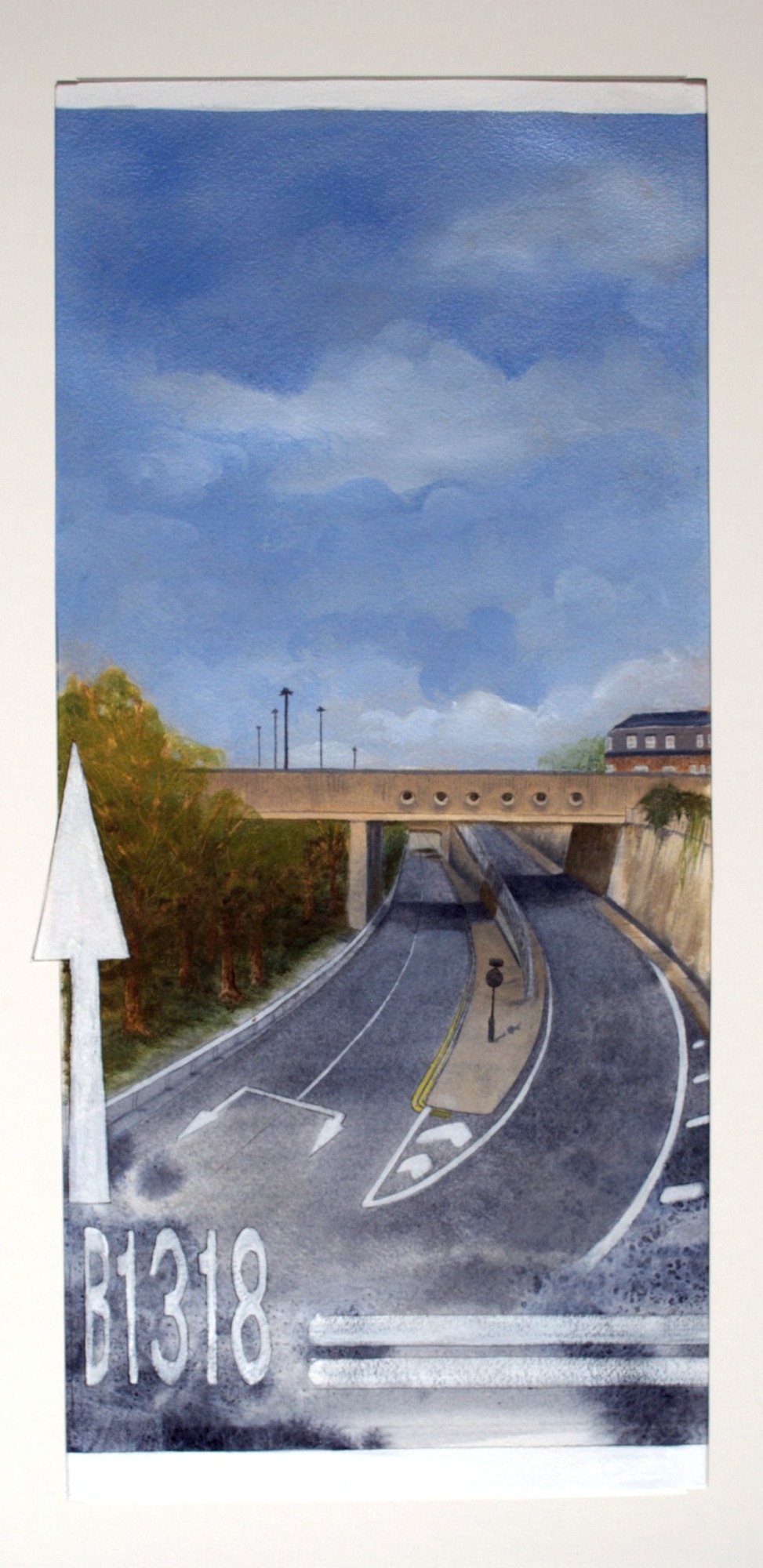
The Central Motorway (A167) in Newcastle upon Tyne is a singular, fascinating (and controversial) road system. Proposed in the 1960s and opened in 1975 as part of Newcastle councillor T.Dan Smith’s ‘City in the Sky’ vision, only the Eastern section was actually built and completed. As such, it stands as a functioning monument to the civic ambition of the time which was mostly abandoned in the 1980s, with the focus moving from the motor car to public transport. As a result, the road features double decker sections and crisscrossing decks in places and is replete with incomplete lanes and ‘ghost ramps’.
The B1318 also seen in the illustration here - with the Hadrian Bridge (1975) above, is better known as The Great North Road, part of the original medieval main route from Scotland to England. The B1318 section runs from Newcastle City Centre to the former mining village of Seaton Burn.
The illustrations here include two ‘sweeping’ sections of the central motorway, one near Exhibition Park (which is bisected by the road) and the other seen at Manors car park. They include border details of road markings and numbers in ‘Transport’ typeface, as seen on the roads themselves. Incidentally, one of the designers responsible for this typeface, Margaret Calvert, went on to design the custom ‘Calvert’ typeface for the Metro system in the city in 1980.
Poles & Pylons
Oil & Ink on Arches paper
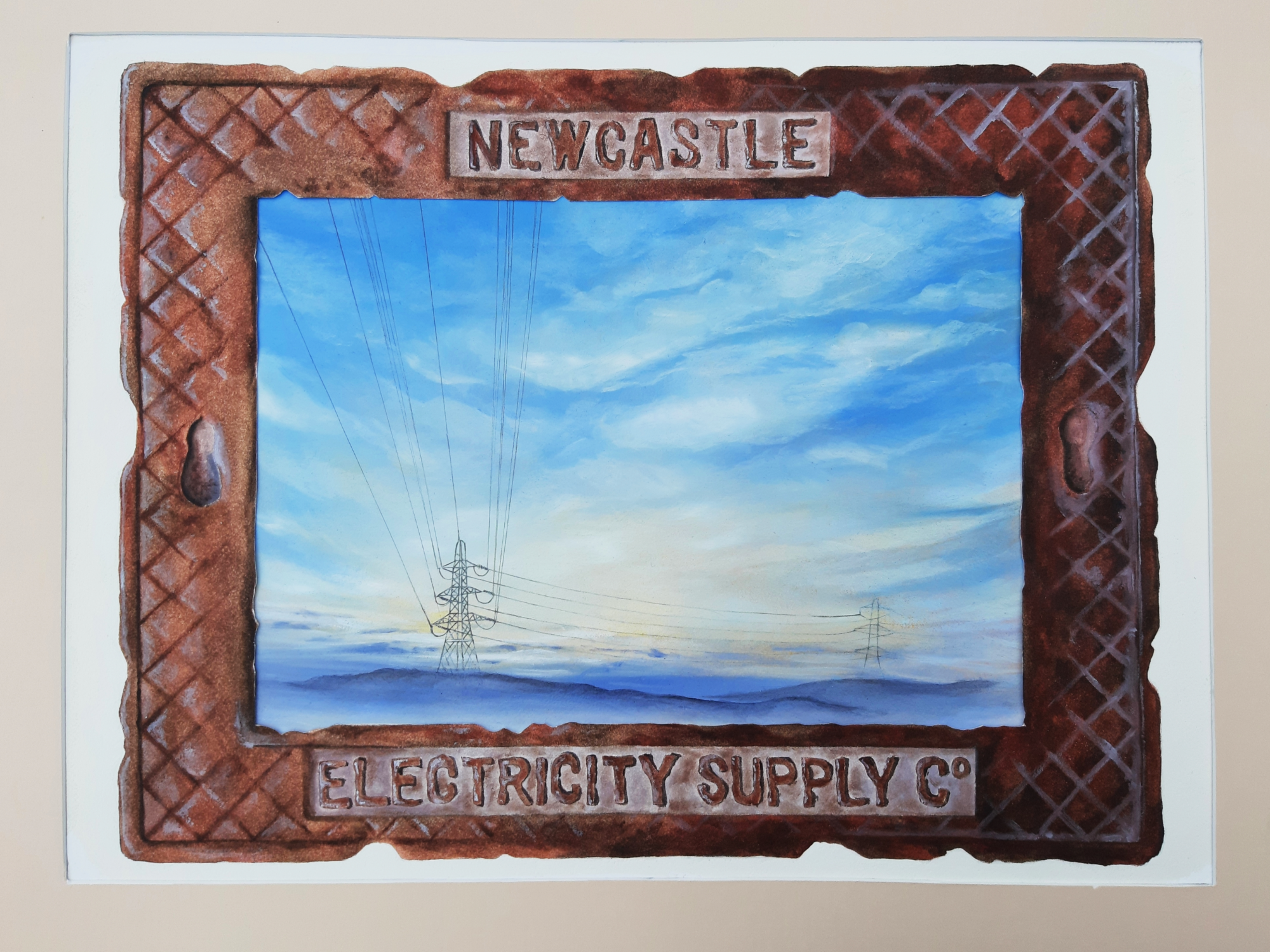
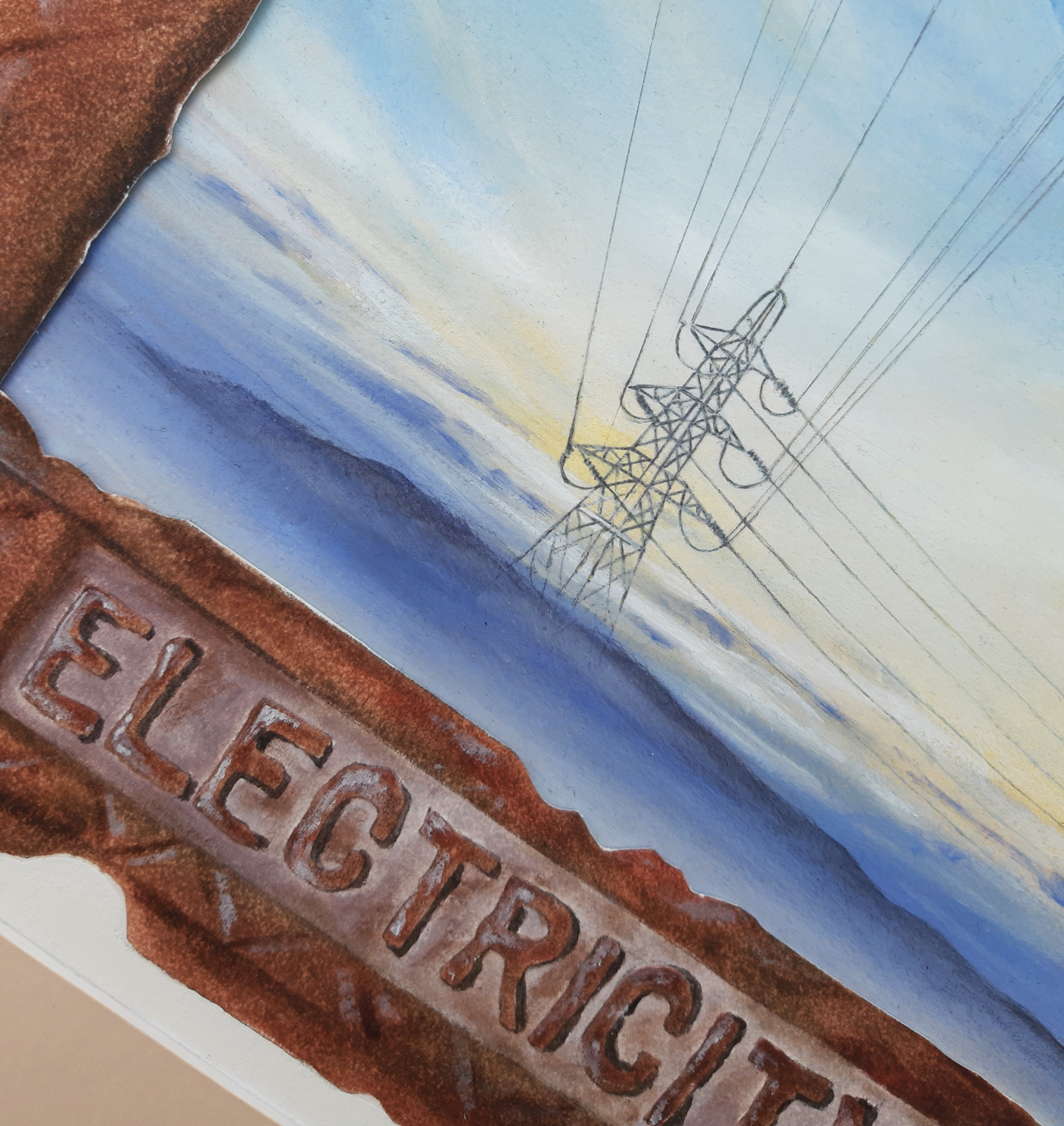
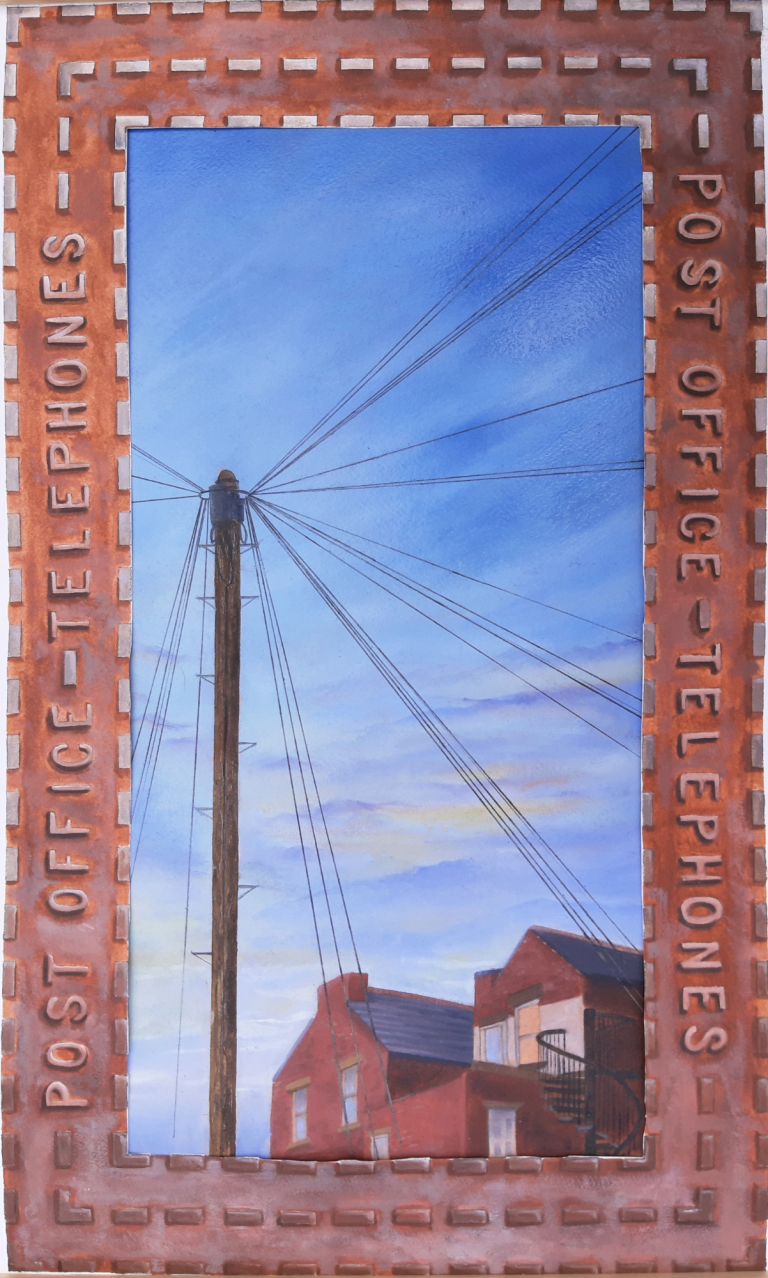
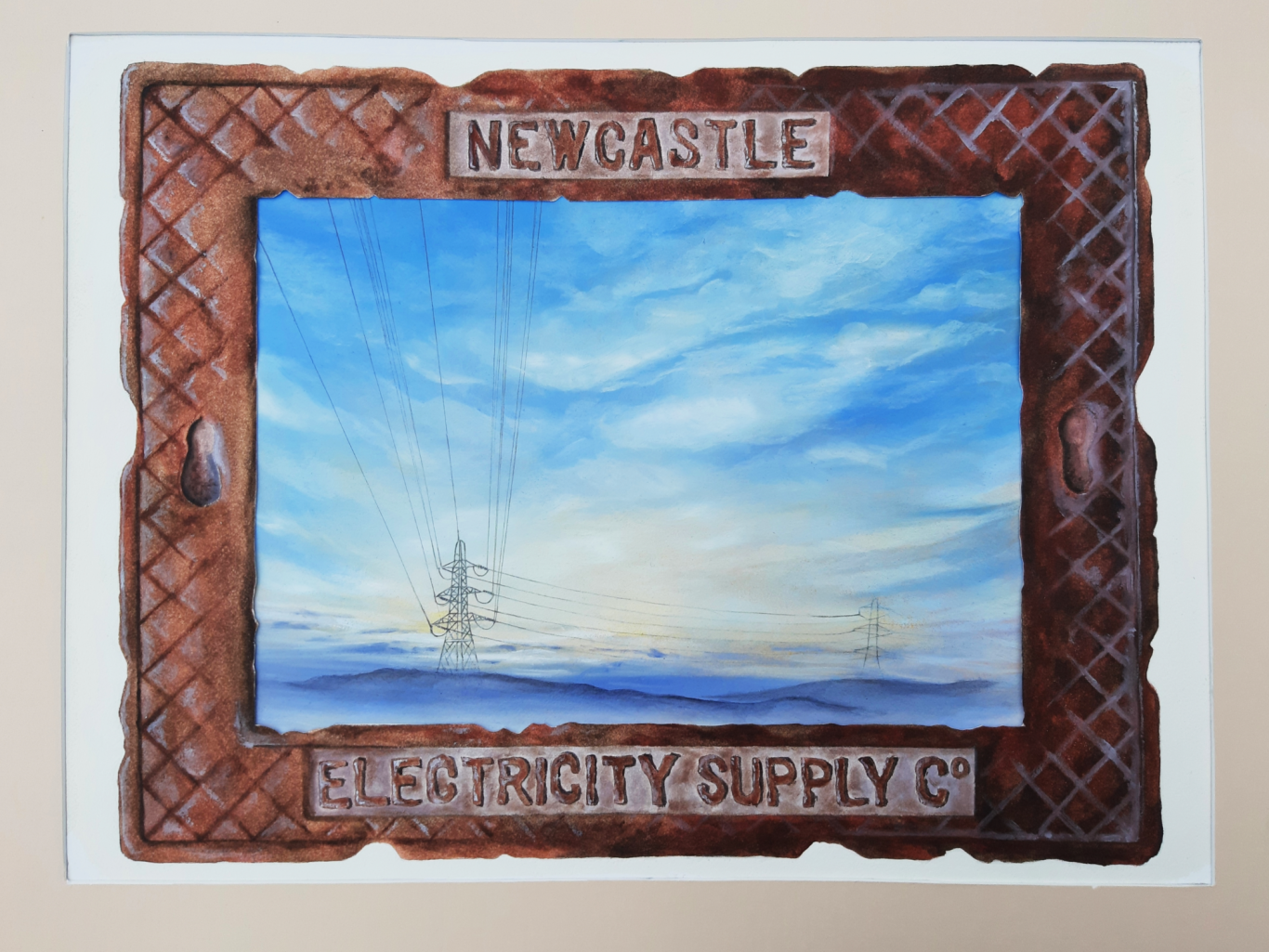
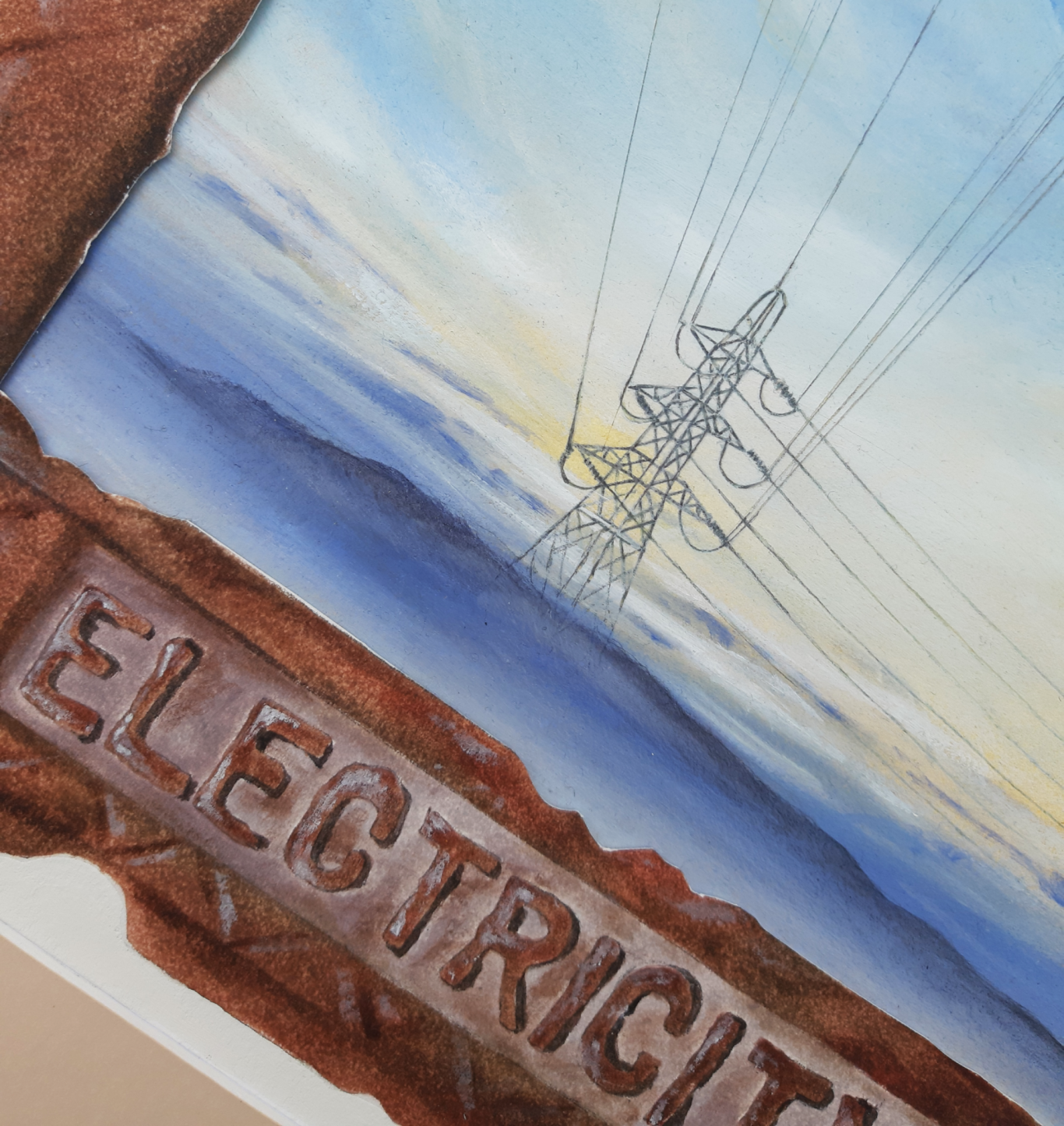
The paintings here illustrate some ‘street level’ aspects of Northern history that might often go unnoticed. Newcastle Electricity Supply Co (NESCo) was established in 1889 by industrialist John Theodore Merz and initially supplied the East side of the city (with Newcastle and District Lighting Co, founded by Charles Algernon Parsons supplying the West). The utility cover seen here serving as a border for the landscape with pylons was drawn from an existing, remaining cover found near Jesmond Dene - possibly either from a supply for electric lighting or trams in the late 19th/early 20th century. Many of these covers can still be seen in the streets of the city, reminders of the innovative industrialists who put Newcastle on the map during the industrial revolution of the 1800s.
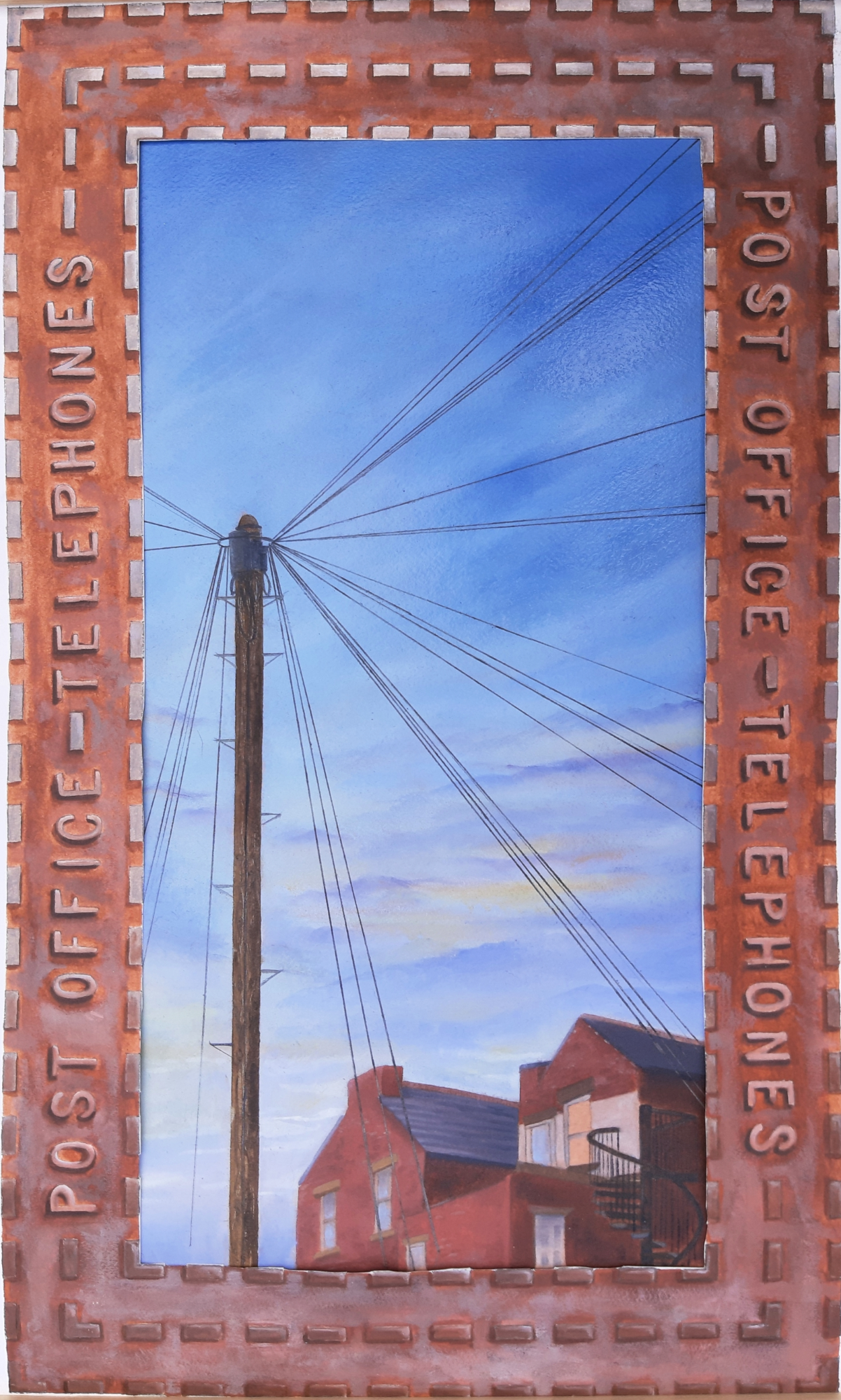
Post Office Telephones draws attention to another ubiquitous, increasingly anachronistic piece of street furniture walked upon daily or occupying sky space but often unnoticed. The Post Office Corporation supplied telephone services from 1969 (when the Post Office took over from the GPO - General Post Office) to 1980 (when it became British Telecom). The utility cover shown on the illustration here is a remnant from this time, and the painting inside shows a typical telegraph pole (photographed behind St. George’s Terrace, Jesmond) with dozens of telephone cables extending out to the properties round about, many of which will not be in use due to the increase of digital communication. Analogue telephone services will be phased out completely in 2027, rendering structure and objects like these obsolete.
Texture Studies
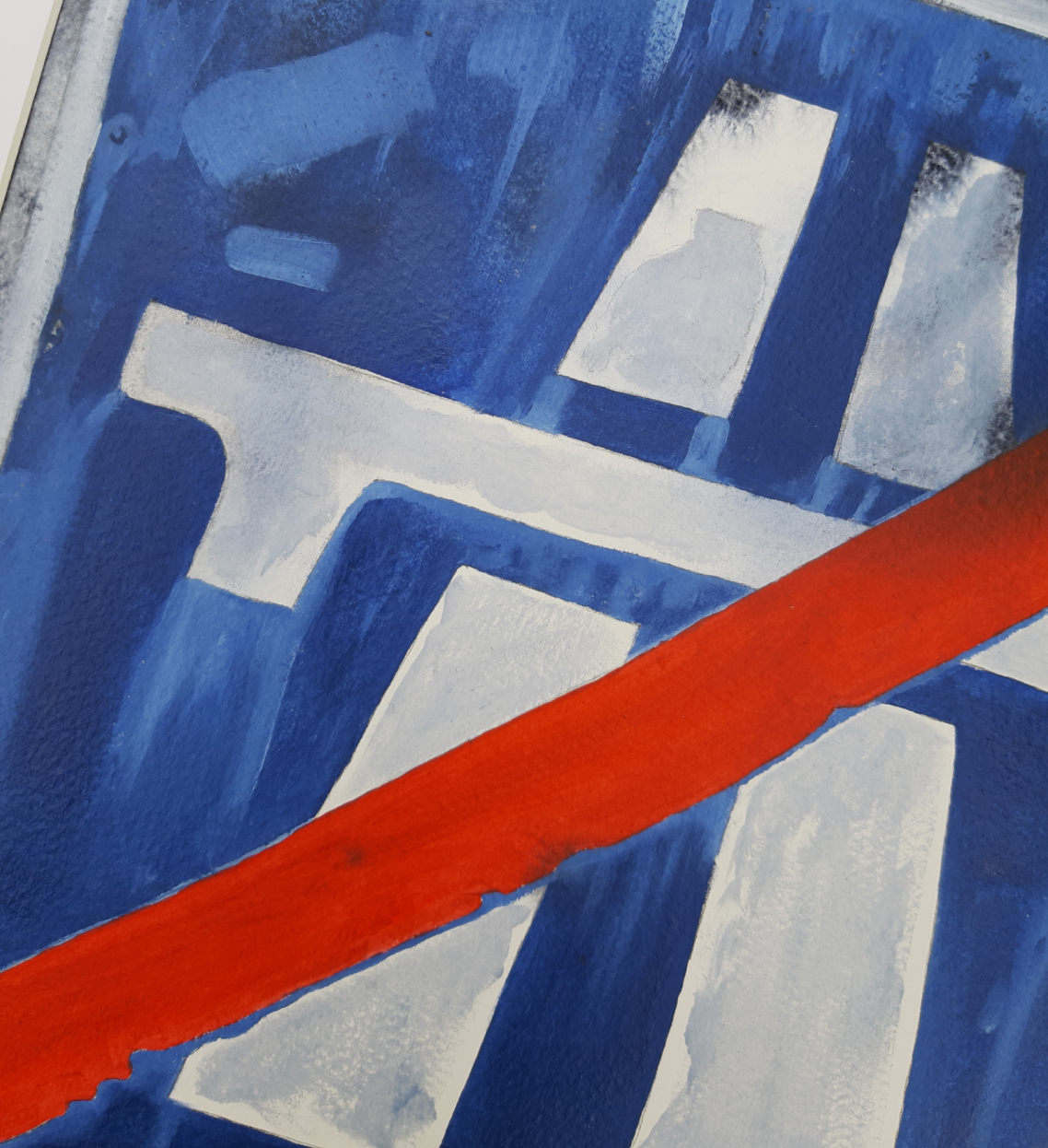
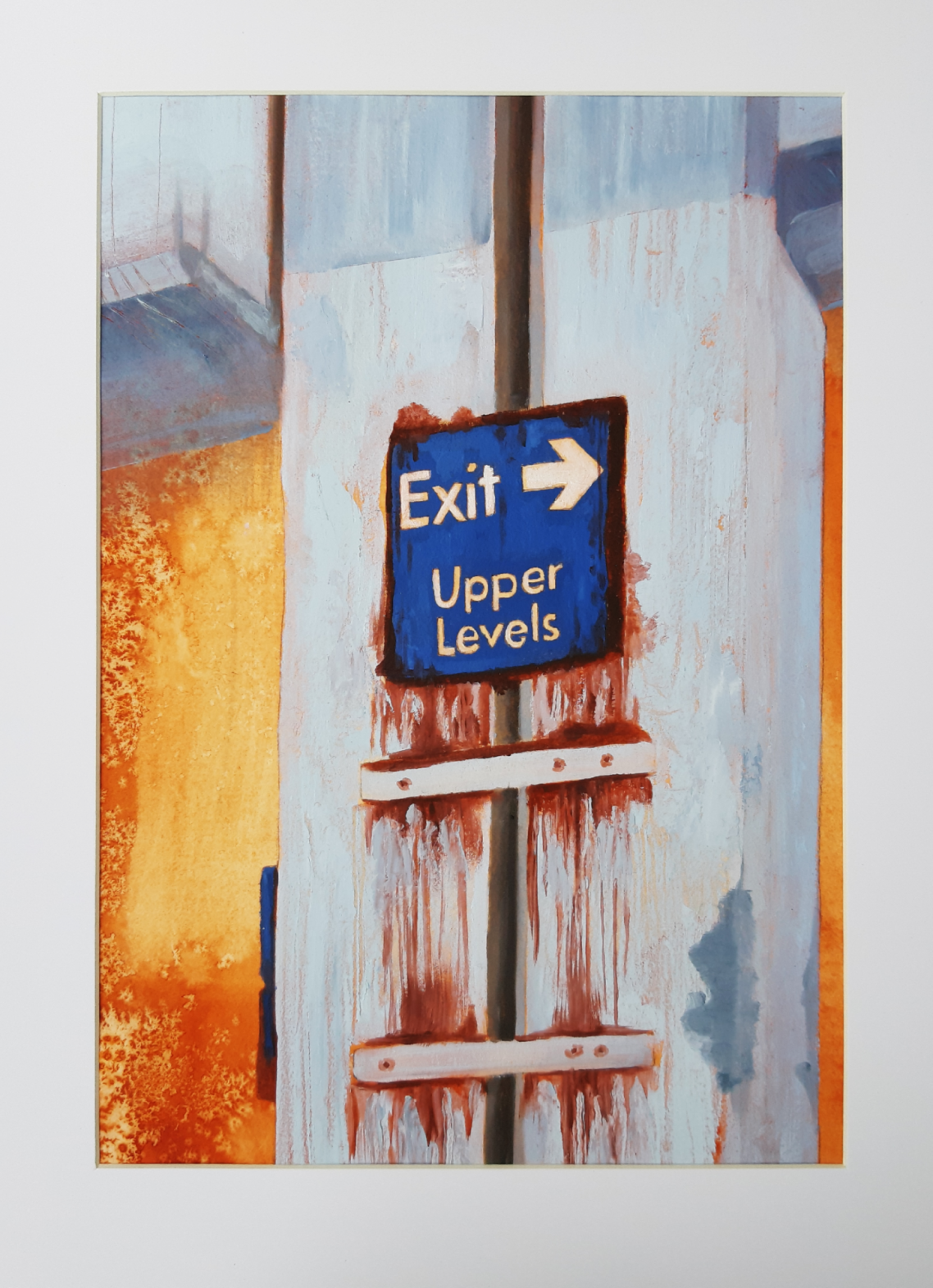
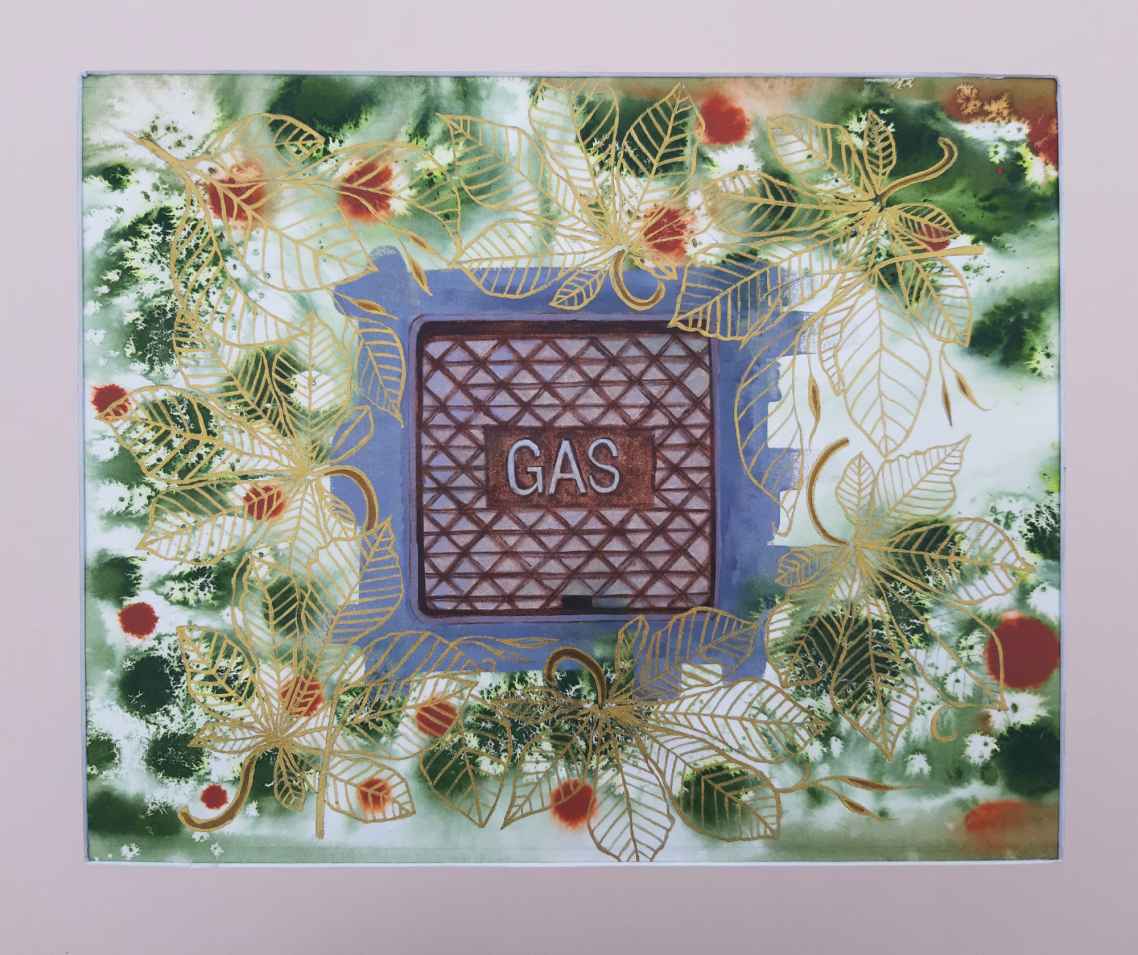
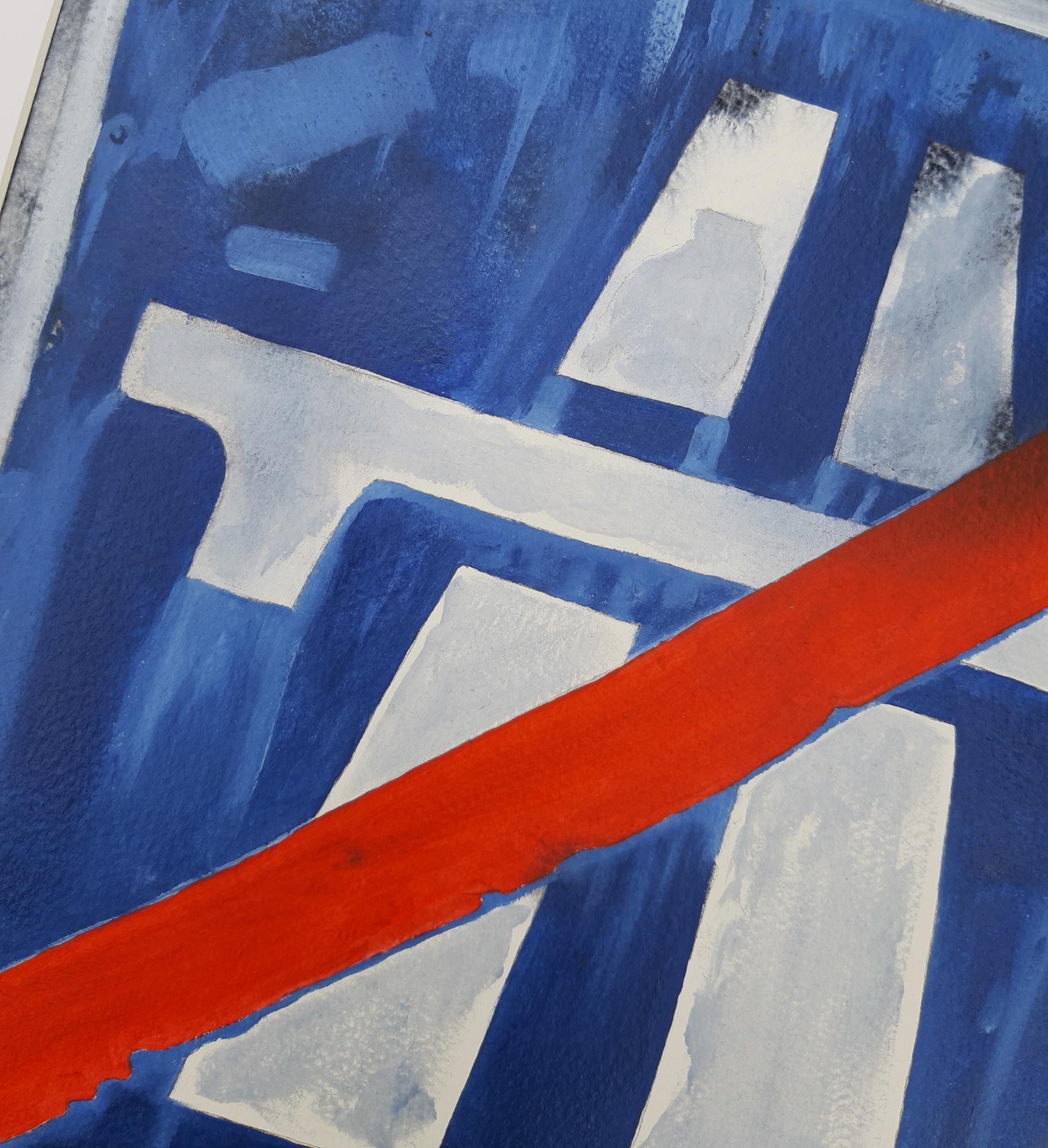
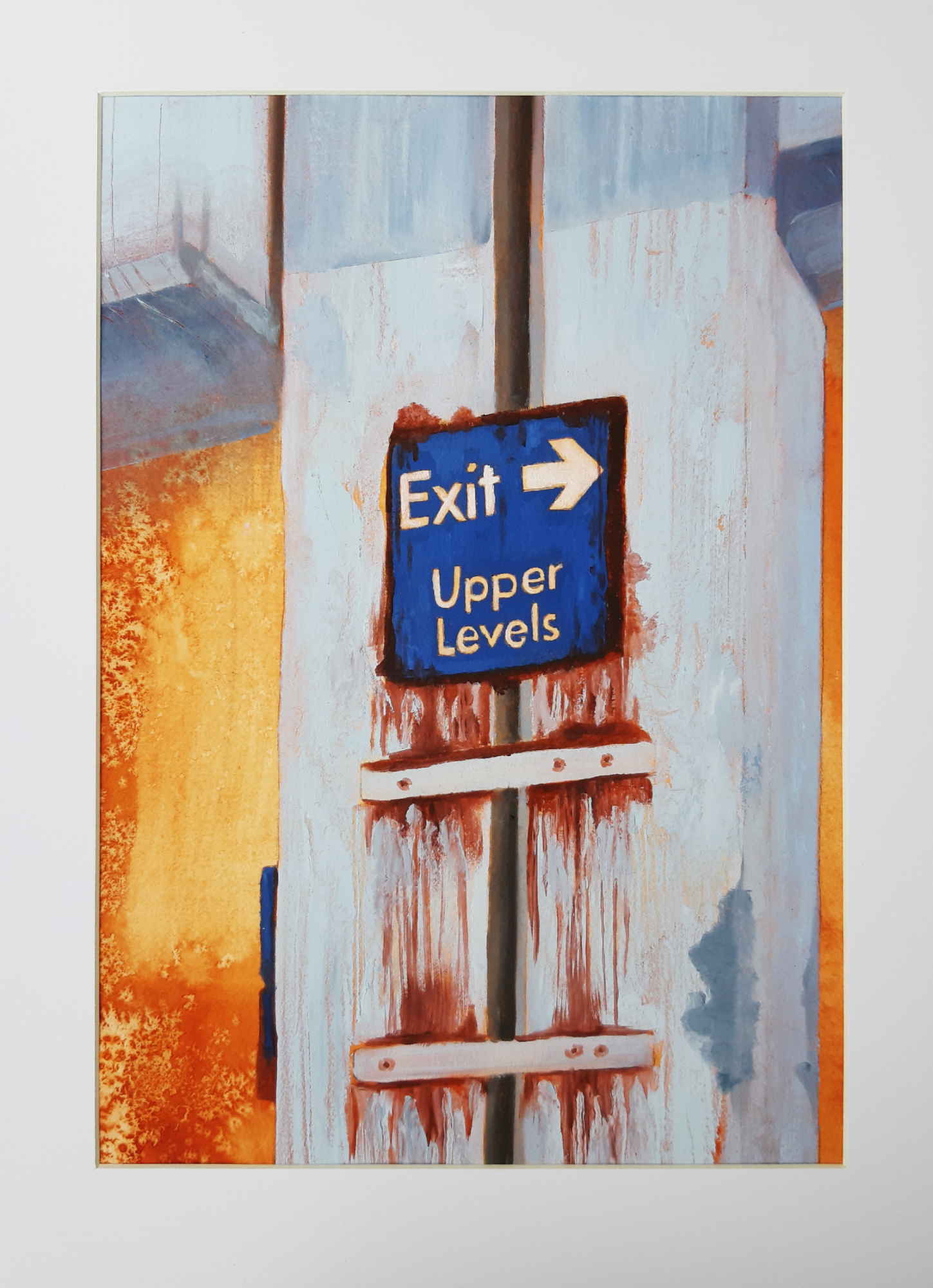
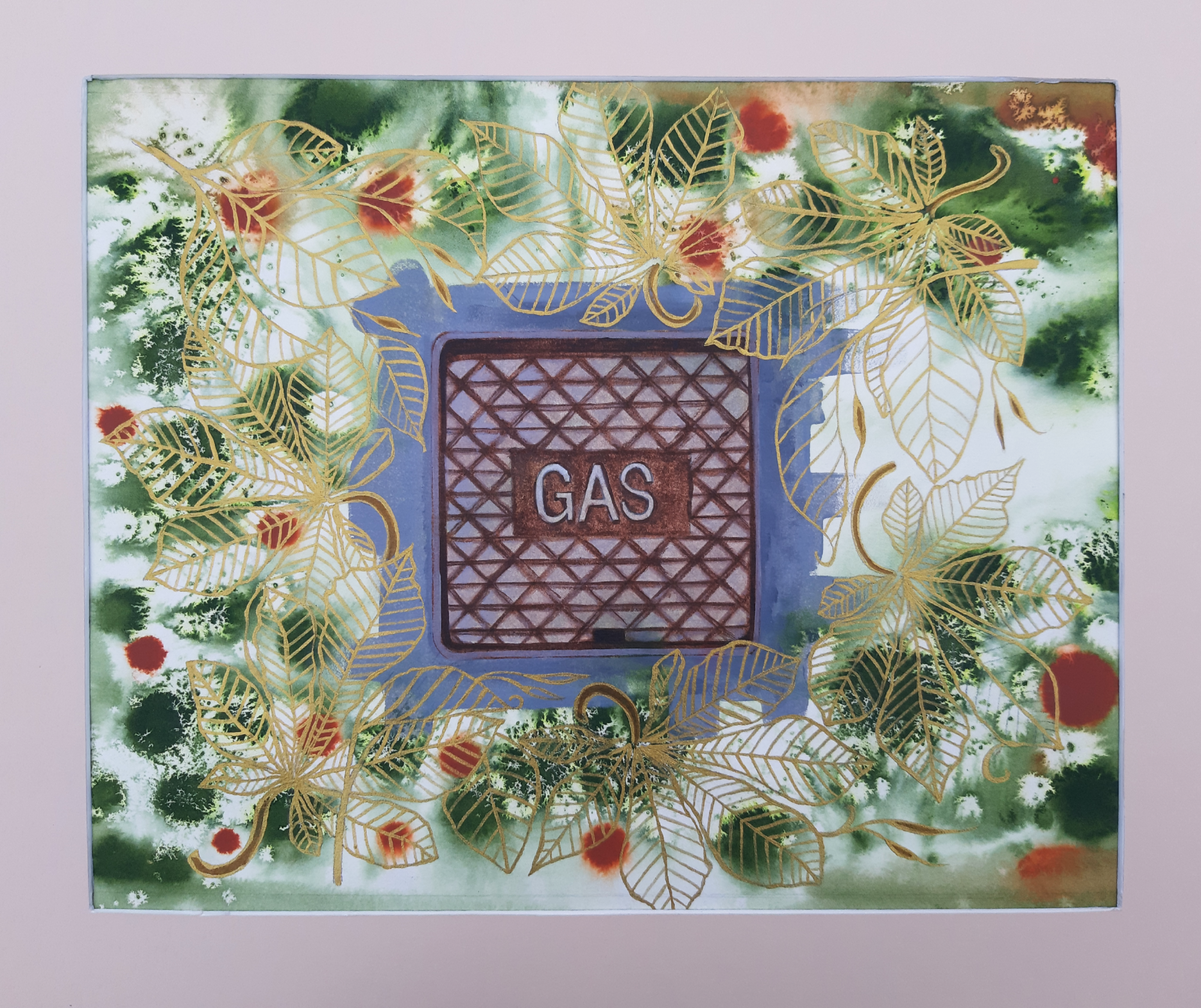
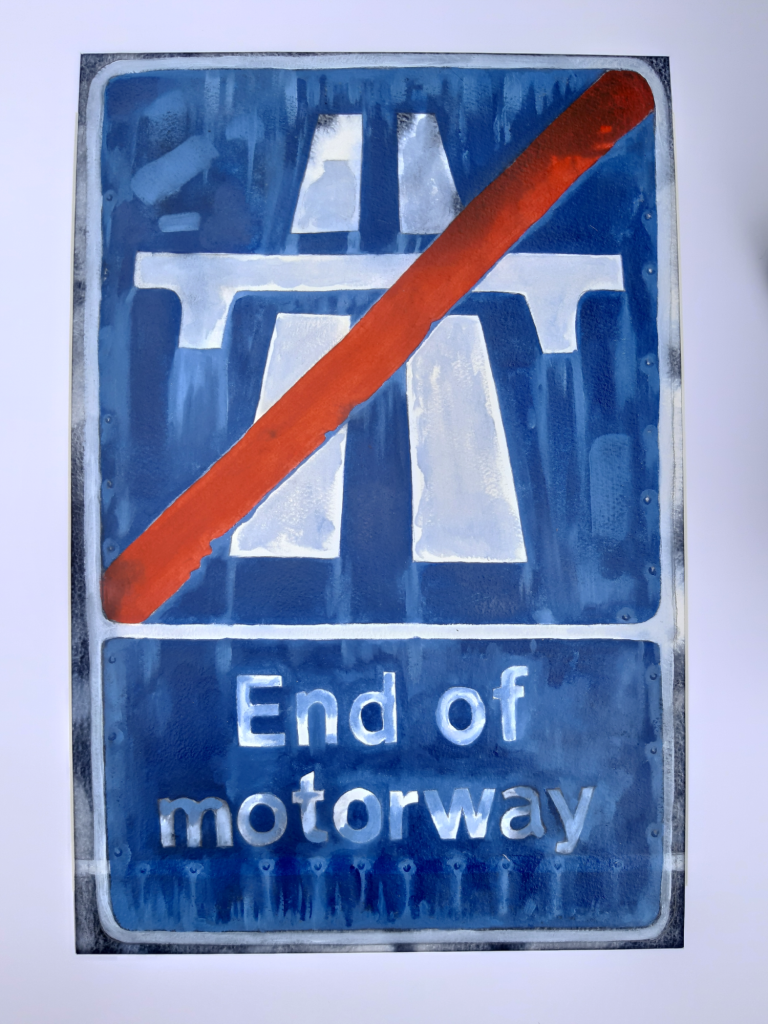
'End of Motorway', 'Exit Upper Levels' & 'Gas'.
Oil and Ink on Arches Paper
The texture studies here show elements observed around the city centre. The purpose of these pieces is to study the fabric and ‘surfaces’ of the city in close detail, drawing attention to the seemingly mundane aspects of the environment which are actually fundamental to our experience of the urban world, and are interesting illustration subjects in their own right.
As an illustrator, I am often torn between wanting to paint a full scene and wanting to narrow in on a macro view of detail and texture. These studies allow me the opportunity to do that and as a result, bring a greater level of detail and understanding to my larger compositions.